Short answer: hiring crews yourself can look cheaper on the sum of the invoices, but the schedule, material purchasing and responsibility for the joins between trades then fall on you. A turnkey renovation with KyivReno costs from 17,900 UAH/m² (Standard), 26,200 UAH/m² (Comfort) or 37,200 UAH/m² (Premium), with the price fixed in the contract and a 1-year warranty on the whole scope. The rate covers all labour, rough construction materials and the installation of finishes; the finish materials themselves and furniture are paid for separately. Hiring crews directly makes sense for a small job with no new utilities, or when you can be on site every day.
The first decision in an apartment renovation is not about materials or design but about who runs the process. You can hire one contractor for the whole scope, or assemble an electrician, a plumber, plasterers and a tiler yourself. This article looks at how the two paths differ in practice: who sets the schedule, who answers for concealed work, who buys the materials, and what the real cost of each option is made of.
Three ways to organise an apartment renovation
Owners choose one of three models, and each splits the work, the risk and the money differently.
- Turnkey renovation. One contractor takes the apartment from demolition to the final clean before you move in. One contract, one price for the whole scope, one party answerable for the result. The client makes the decisions and signs off each stage, but does not have to fit the crews together.
- Hiring crews yourself. The owner agrees terms separately with an electrician, a plumber, plasterers, a tiler and a painter. Each sends their own invoice and answers only for their own part. The schedule, material purchasing and sign-off of the work stay with the owner.
- A mixed approach. A contractor carries out a rough renovation, meaning everything that ends up inside the walls and under the floor, and the owner does the finishing later, alone or with other tradespeople. This is a complete standalone service, not a cut-down turnkey renovation.
The difference between these models is not the skill of individual tradespeople. A good electrician is a good electrician in either arrangement. The difference is who answers for the gaps between their jobs, and that is exactly where most renovation problems start.
Who sets the schedule, and why weeks get lost between crews
An apartment renovation is a chain in which each stage can only start once the previous one has been signed off. Electrical and plumbing runs go in before the plaster. Plaster comes before the screed and the tiling. The screed needs weeks to dry, and that pause cannot be shortened. Tile goes only onto tested waterproofing, and finishes only onto dry, level surfaces.
When you hire the crews, you become the dispatcher of that chain. The plasterers cannot start until the electrician has finished, and the electrician may be working on another site at that moment. Every hand-over between crews can cost several days of waiting, and a full apartment renovation has at least five of them. If one crew slips by a week, the whole schedule slips, and the next crew may no longer have a free slot.
In a turnkey renovation, the schedule is set by the site supervisor assigned to the property. They plan when each crew goes in, order materials ahead of each stage and sign off the work before the next layer covers it. The timeline then depends on the level of finish: Standard takes 3-4 months, Comfort 4-5 months, Premium from 6 months. The order of the stages is covered in detail in our article on the stages of a turnkey renovation.
Who answers for concealed work and defects at the joins
The most expensive renovation defects do not happen inside one tradesperson's work but at the boundary between two. Tile comes away because the plaster beneath it was weak. A leak appears under the bath because one person did the waterproofing and another laid the tile on it. A socket ends up behind a wardrobe because the electrician worked without a furniture layout.
When crews are hired separately, each guarantees only its own part. In a dispute over a leak the tiler points at the waterproofing and the plumber at the tile, and once everything is closed up it is almost impossible to prove who is at fault. Opening up the wall or floor falls to you, at your expense.
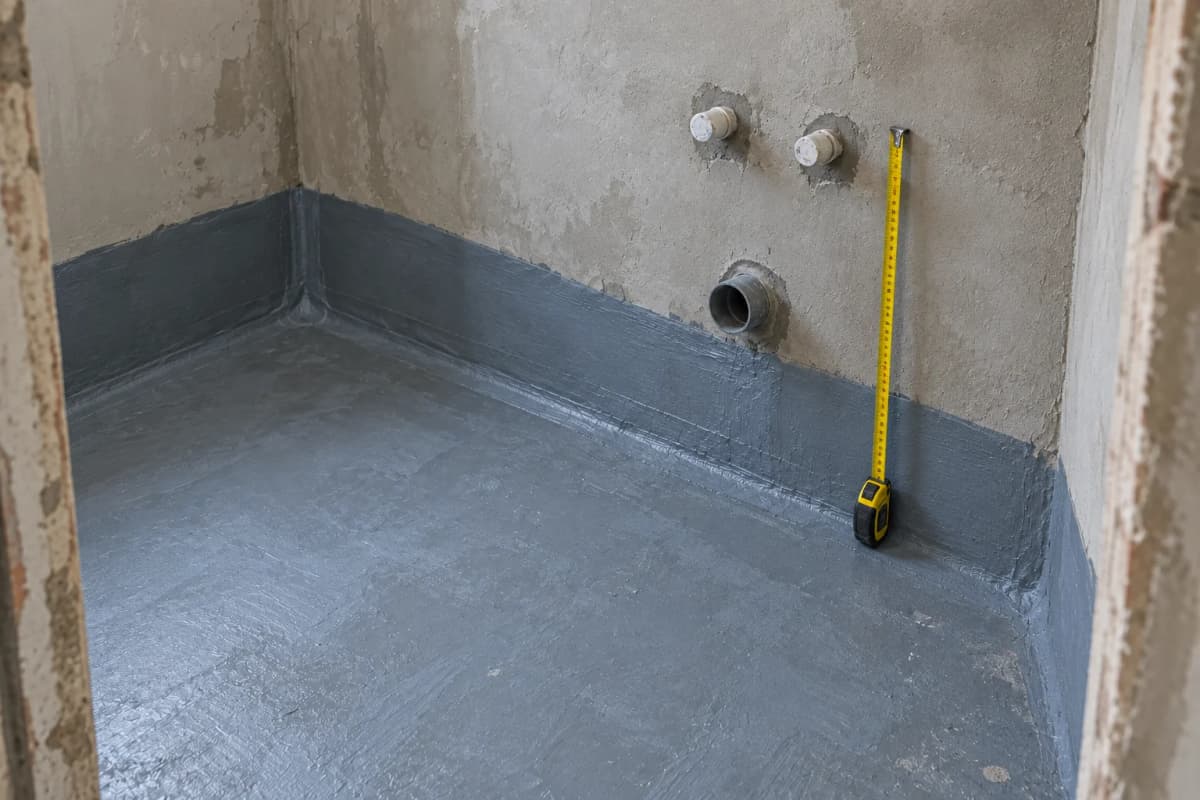
In a turnkey renovation that boundary disappears, because the whole scope belongs to one contractor. At KyivReno a quality inspector checks concealed work before it is covered by plaster or screed. Cable and pipe runs are photographed with a tape measure, and the client receives the measurement records and a photo report of the concealed work. The 1-year warranty covers all completed work, not each crew separately.
Materials: who calculates, buys and answers for leftovers
Materials are the second part of the job an owner takes on when hiring crews directly. Each crew hands over its own list: the electrician wants cable, conduit and breakers, the plasterers want mixes and guide beads, the plumber wants pipes and fittings. Buying, delivering, carrying up and storing all of it falls to you, and on time, so that no crew sits idle. A mistake in quantities means either another trip or leftovers you can no longer return.
In KyivReno packages, rough construction materials are included in the per-square-metre rate: plaster mixes, screed, waterproofing, cable, pipes and fixings. The contractor calculates, buys and delivers them, and answers for the quantities too. The labour to install and apply the finishes is in the rate as well. What is paid for separately is the finish materials themselves, which the client chooses (paint, tile, flooring, wallpaper, lights, sanitary ware), and furniture. We buy the finish materials too, with the client's money: you choose and approve the items, and the contractor takes care of the purchasing. That line matters, because the same kind of tile can cost 700 or 4,000 UAH/m², and there is no honest way to hide that choice inside one averaged rate.
If you take the rough renovation on its own, there are two options: 6,000 UAH/m² for labour only, with the owner buying the materials, or 12,000 UAH/m² including basic materials.