What turnkey electrical work includes
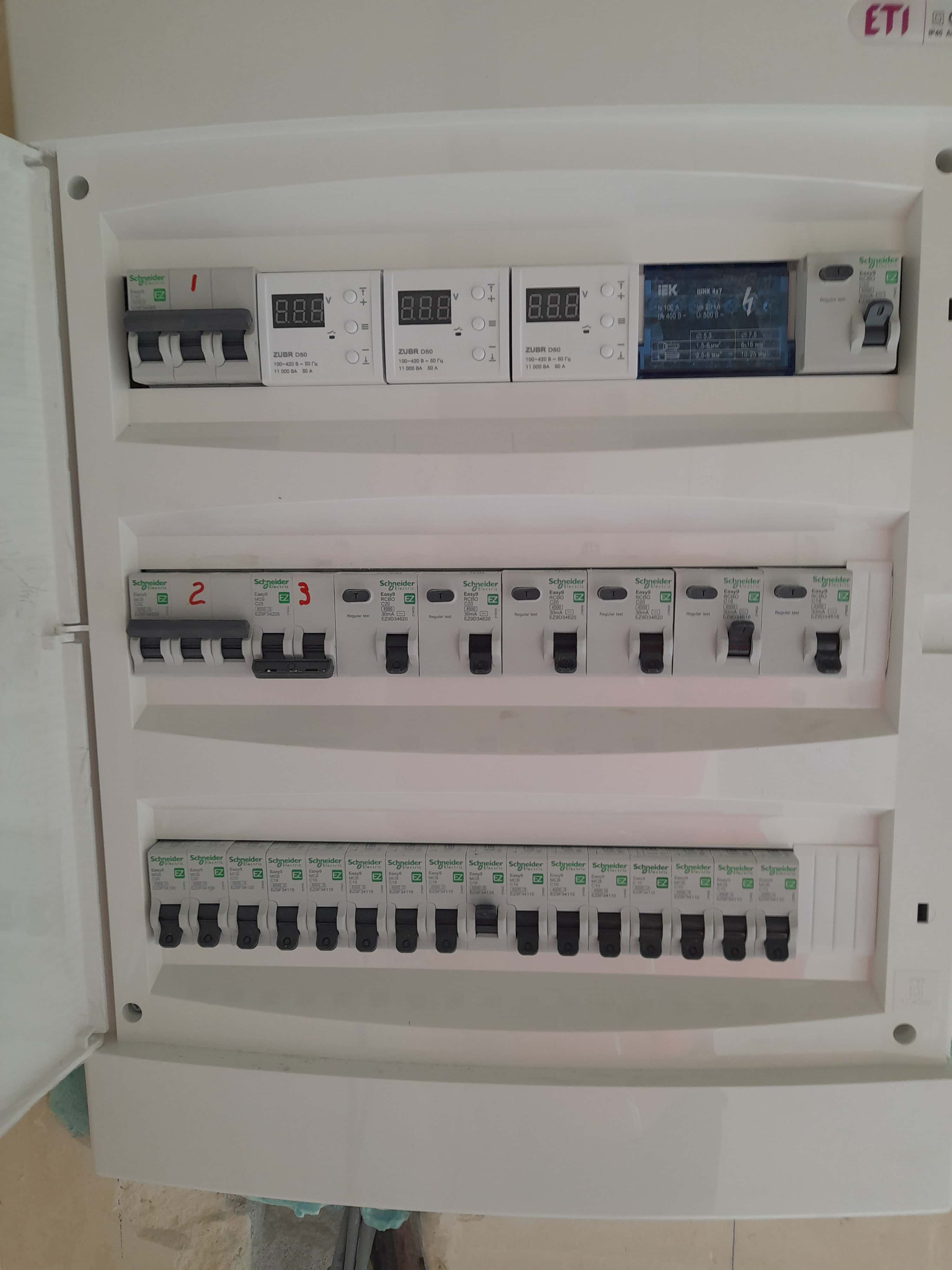
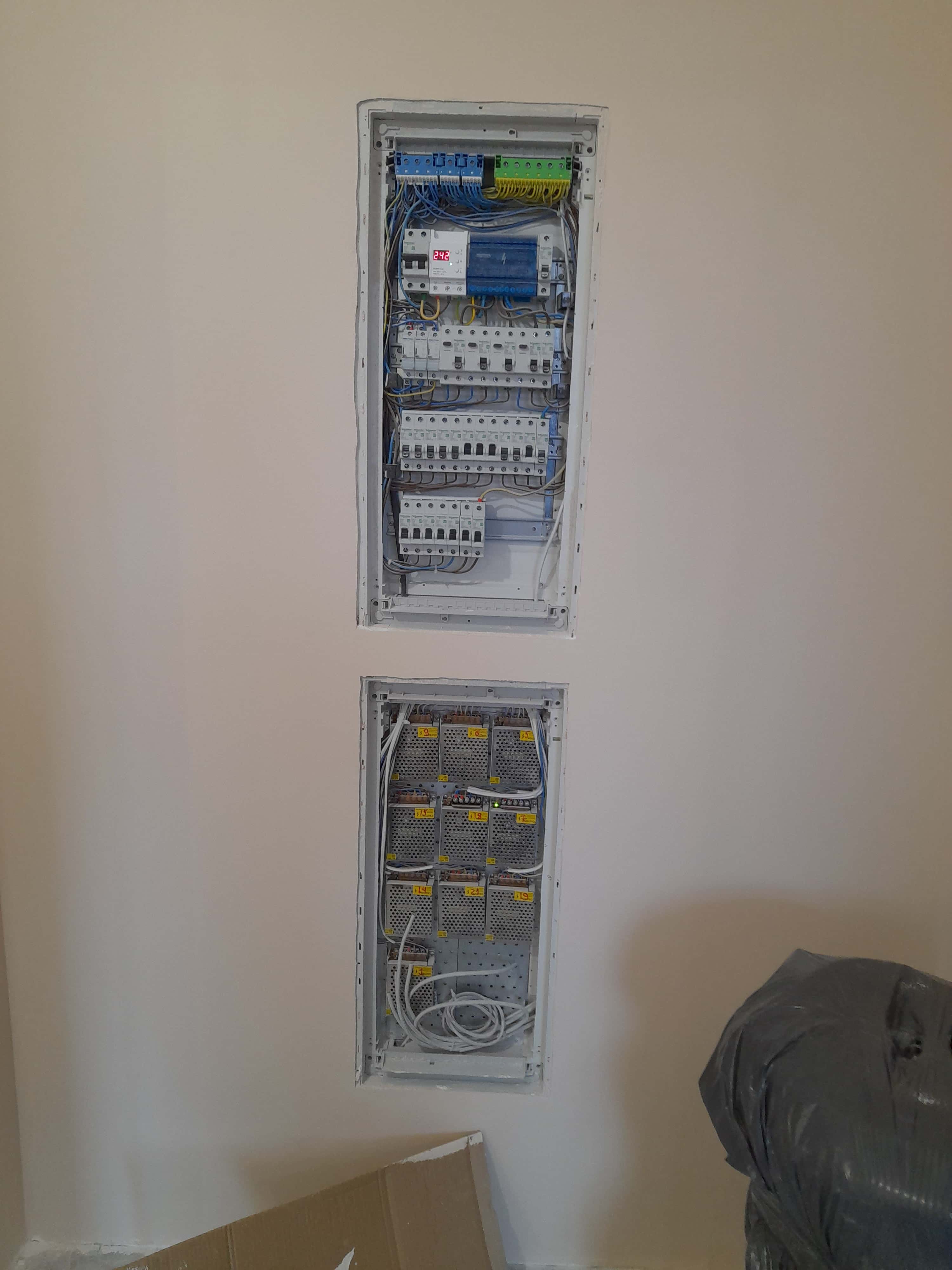
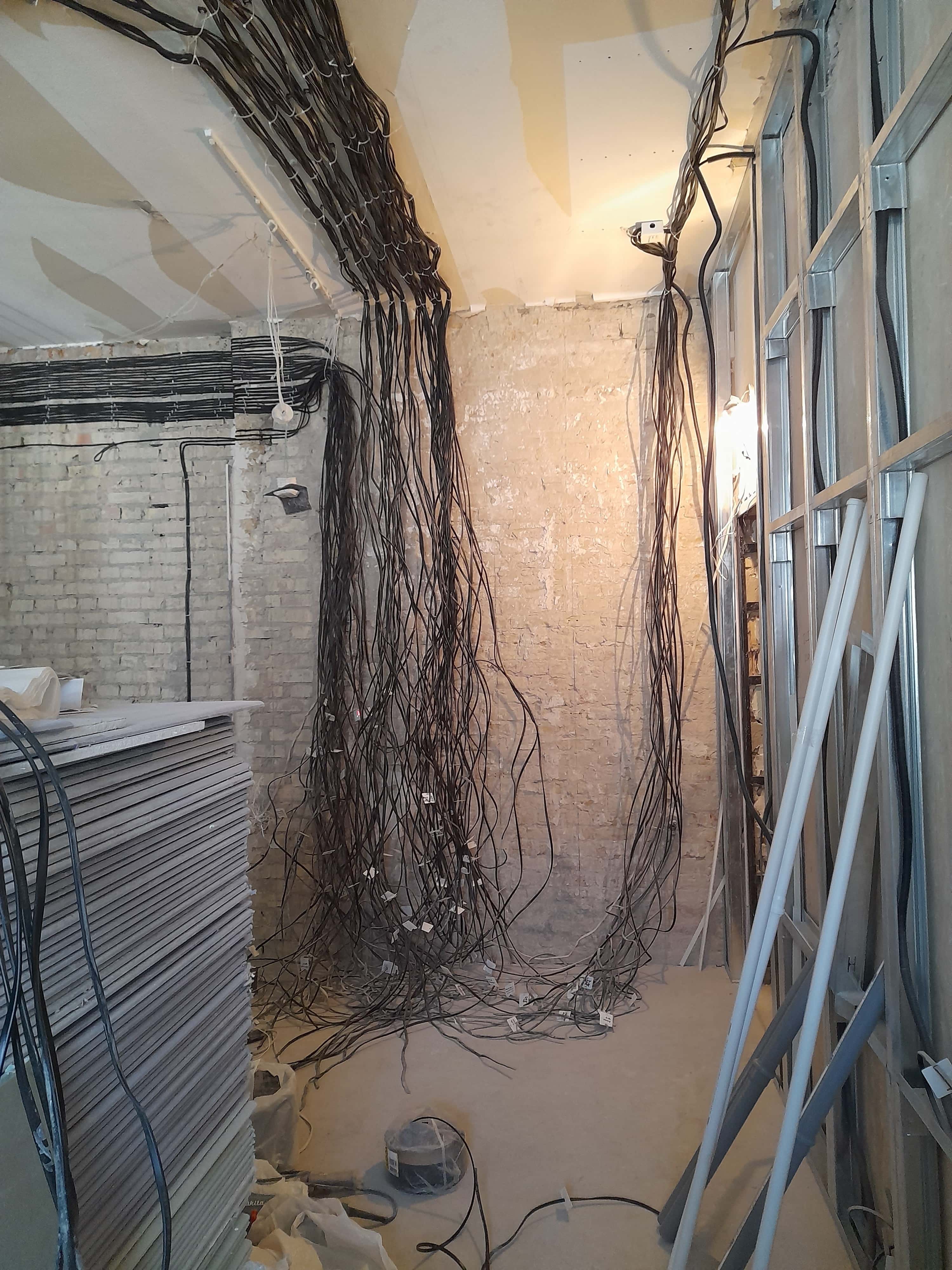
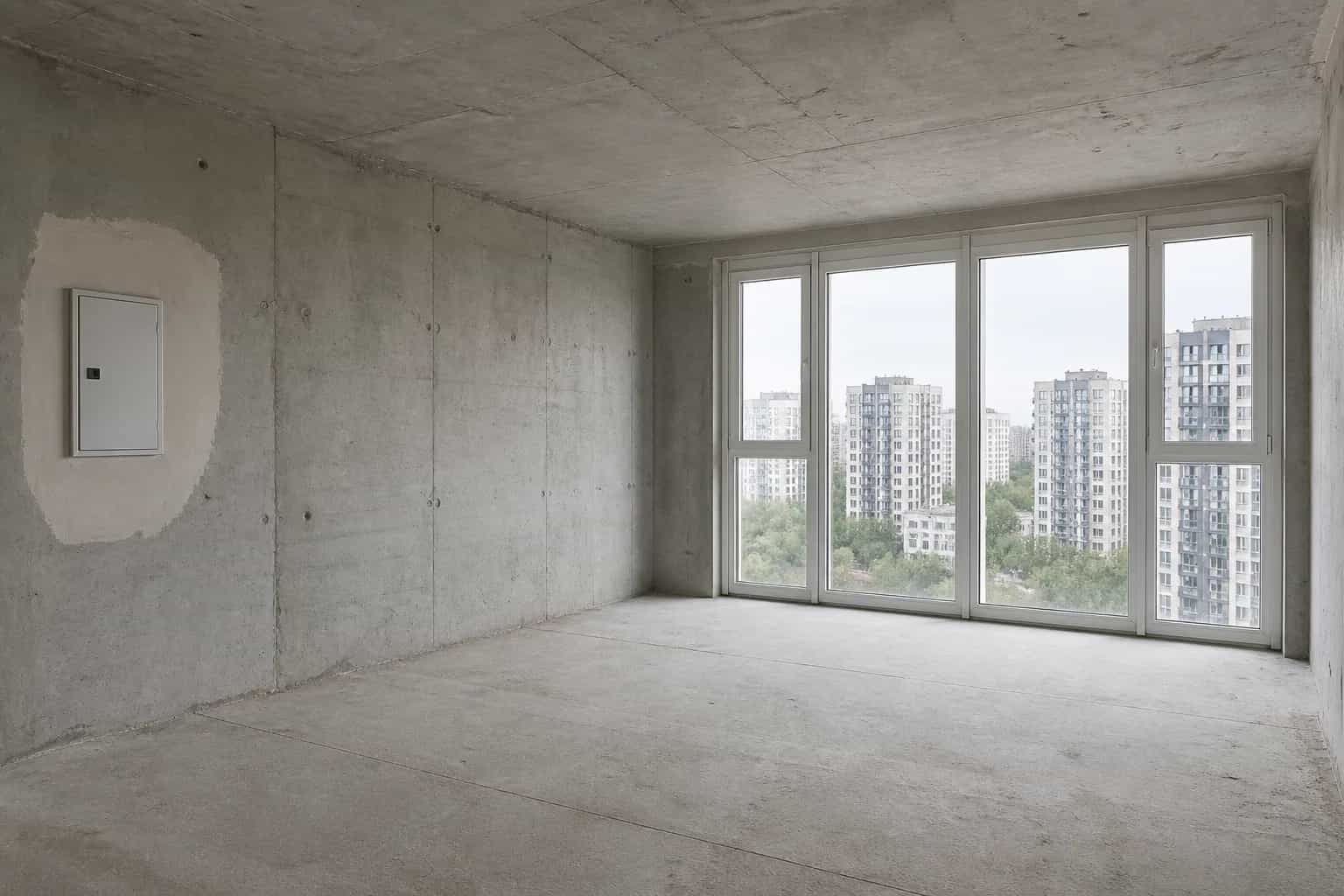
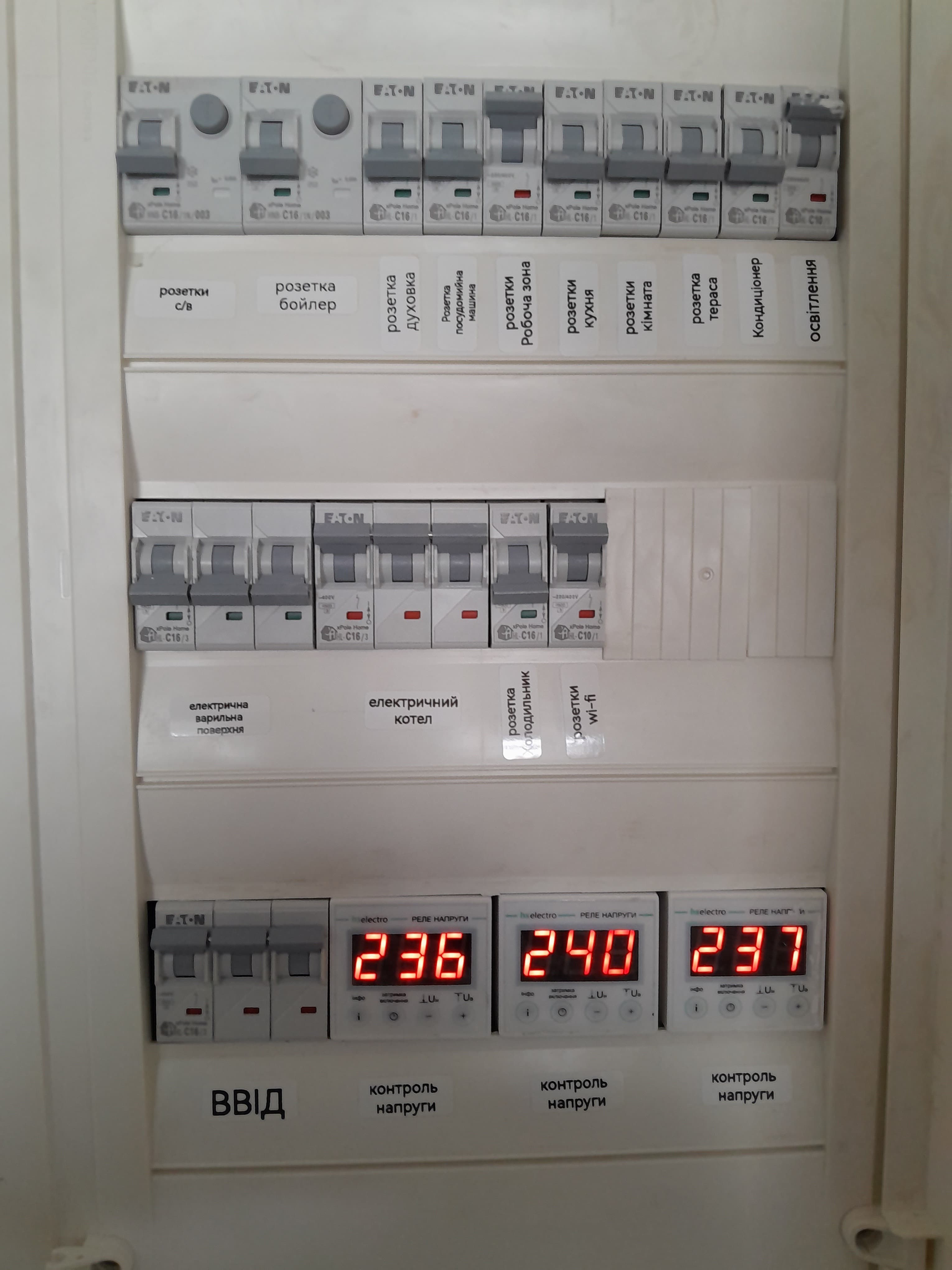
Electrical work in Kyiv by KyivReno covers the full cycle — from drawing up the wiring layout based on where your furniture and appliances will sit, through to handing over the distribution-board test reports. We do this for a whole apartment or house, as part of a rough renovation or a turnkey renovation. The crew handles the rewiring: strips out the old wiring, chases the walls, runs power and low-voltage cabling in conduit, installs back boxes, assembles the distribution board with circuit breakers and RCDs, and pulls dedicated circuits for air conditioners, underfloor heating, oven, hob and water heater.
Before any chasing starts, the layout is signed off with the client in writing — with a point-by-point schedule of sockets, switches and lighting for each room. That schedule becomes part of the contract.
How electrical work is carried out: from layout to handover
After a free site visit by a specialist, the client receives a wiring layout and an estimate within 3–5 days. The price is fixed in the contract, and any change in scope or extra charge needs the client's written approval. Stages of work: sign-off of the layout and schedule with the client, demolition of old sections and wall chasing (2–4 days), pulling cable in conduit to every point with labelling, installing back boxes and junction boxes, assembling the distribution board with modular equipment, connecting the lines and testing the groups (1–2 days), circuit testing — insulation resistance measurement, phase-to-neutral loop test, RCD testing under load.
A KyivReno quality inspector who is not part of the crews checks the concealed work before the chases are closed — groove depth, conduit type, quality of connections inside junction boxes, line labelling. A photo report of the concealed work is handed to the client together with the acceptance certificate. That kind of oversight isn't something you get from private electricians on OLX, where responsibility for the hidden sections falls on the apartment owner.
Standards, materials and warranty
KyivReno carries out electrical work in line with the current Ukrainian building code DBN V.2.5-23:2025 (in force since 1 January 2026, replacing the 2010 edition), the PUE (Rules for Electrical Installations, Ministry of Energy order No. 476, 2017) and DBN V.2.5-27 on electrical safety. All cabling carries DSTU 4743 and DSTU IEC 60227/60502 markings — fire-safe copper VVGng-LS in cross-sections sized for the actual load.
Modular equipment and wiring accessories — Schneider Electric (Acti9, Resi9, Asfora, Sedna), ABB (System pro M compact, Zenit), Hager, Legrand (Valena, Etika); for budget sections — IEK. Cable — Odeskabel VVGng-LS and ZZKM, conduit — KOPOS Kopoflex. All completed work carries a 1-year warranty, and for concealed connections KyivReno remains responsible for the entire warranty period.
Our projects with electrical work
Examples of completed jobs that included full electrical rewiring:
- 50 m² apartment renovation at Ridny residential complex, Hatne — full wiring with dedicated circuits for appliances and underfloor heating in the bathroom.
- Designer renovation of a 78 m² two-level apartment at Krystalevi Dzherela residential complex — track lighting, three-phase distribution and scene control.
The full list is in the project portfolio. Electrical work is included in all turnkey apartment and house renovation packages.
Frequently asked questions about electrical work
How long will rewiring an apartment take?
For a one-bedroom apartment of 35–45 m² — 5–7 working days, a two-bedroom of 55–65 m² — 7–10 days, a three-bedroom of 75–90 m² — 10–14 days. Timelines depend on the number of points, whether there's underfloor heating, and how involved the layout changes are. The final schedule is fixed in the contract.
Copper or aluminium, VVGng or VVGngd — which cable should you choose?
KyivReno only runs copper cable marked VVGng-LS or VVGngd-LS — we don't use aluminium in residential wiring because of the risk of oxidation at joints and the restrictions in the PUE. The cross-section is chosen for the actual load: 1.5 mm² for lighting, 2.5 mm² for sockets, 4–6 mm² for the oven, hob and water heater.
Are RCDs mandatory in wet areas?
Yes — DBN V.2.5-27 requires residual-current devices with 30 mA sensitivity on all circuits in bathrooms, WCs and the kitchen. KyivReno installs RCDs or RCBOs on every wet-area circuit by default; the RCD-under-load test report is handed to the client together with the acceptance certificate.
Do you need separate design documentation for a power upgrade or three-phase supply?
Yes — raising the allocated power above the meter's rating or switching to a three-phase supply requires design documentation and sign-off from DTEK Kyiv Electric Networks. KyivReno prepares the technical documentation, handles the approvals, and carries out the tie-in at the building's switchgear once the permit is issued.
Book a free site visit by a specialist to assess the electrics and get an estimate. Reach out via the contact page or call the numbers listed on the site.