Decorative Plaster in Kyiv 2026: Types, Price per m² and How to Choose

KyivReno13 min read
decorative plaster Kyivdecorative plaster priceVenetian plastermicrocementwall finishing
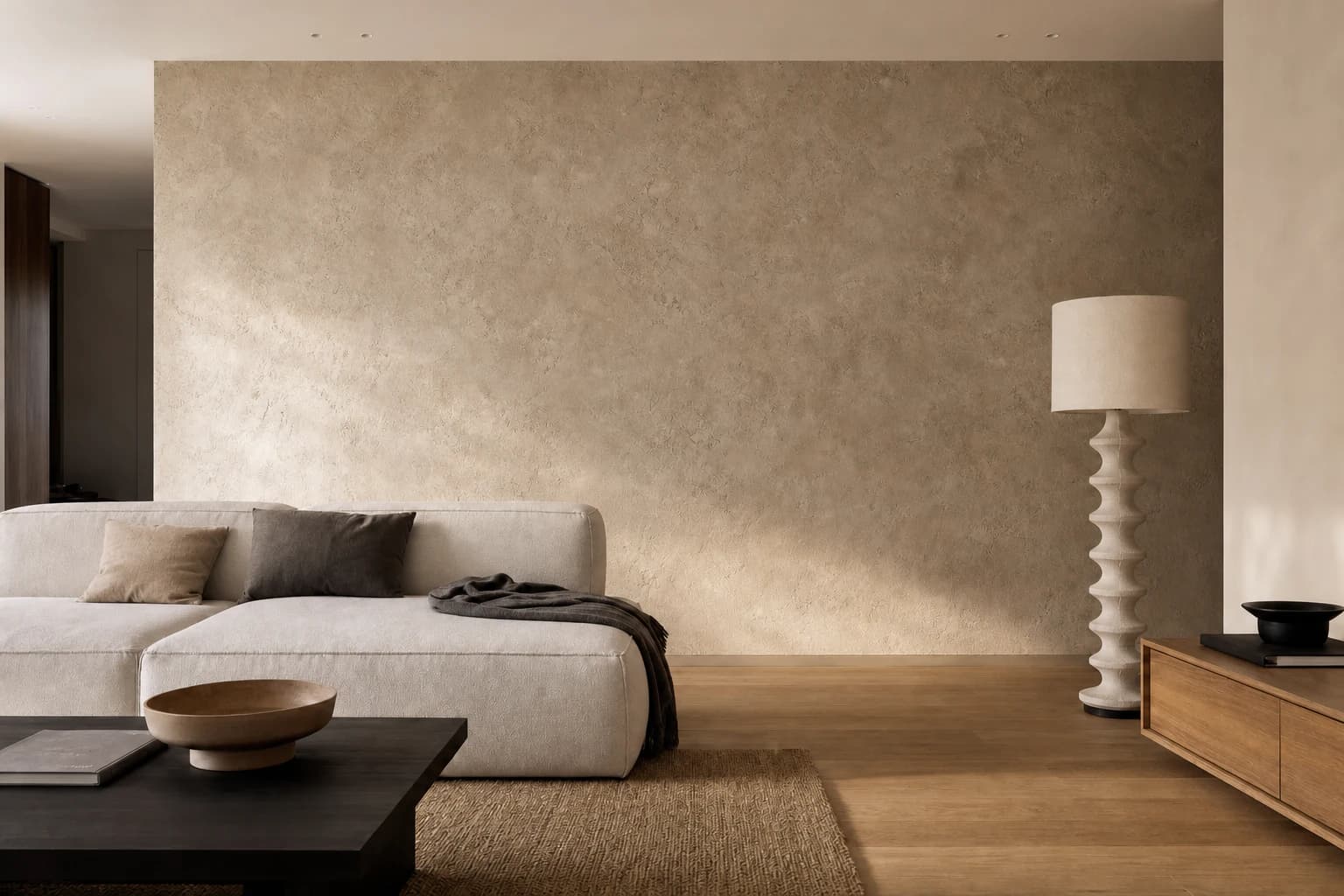
Living room with warm beige travertine-effect decorative plaster

The term “decorative plaster” covers dozens of different finishes: from delicate pearlescent silk to textured travertine, polished Venetian plaster, and multilayer microcement. They differ not only in appearance but also in substrate requirements, water resistance, repairability, and price. Based on publicly available Kyiv price lists in July 2026, a rough guide for labour and materials starts at around UAH 450–600/m² for simple silk and sand effects and reaches UAH 1,400–1,800/m² for microcement. Wall preparation, complex corners, and a custom sample may be charged separately.

In this article, we compare finishes as complete systems rather than looking only at the decorative material in the bucket. This matters: the same texture on a smooth, dry wall and on a substrate with cracks requires different amounts of plastering and painting work, so an accurate price is only possible after inspecting the substrate and approving a sample.

How much does decorative plaster cost in Kyiv in 2026?

For an initial budget estimate, it is more useful to calculate the area of the specific walls rather than the floor area of the apartment. An accent wall behind a sofa or bed is usually 10–20 m², while the walls of a hallway or open-plan kitchen and living room may total 30–50 m². Based on two publicly available price lists from Kyiv contractors, indicative rates for labour and decorative materials are as follows:

  • Wet silk or sand effect: UAH 450–600/m². A 20 m² wall costs approximately UAH 9,000–12,000.
  • Concrete, stone, grotto, or travertine effect: UAH 850–1,000/m². A 20 m² wall costs around UAH 17,000–20,000.
  • Classic Venetian plaster: UAH 750–950/m². A 20 m² wall costs approximately UAH 15,000–19,000.
  • Microcement: UAH 1,400–1,800/m². A 20 m² wall costs approximately UAH 28,000–36,000.
These are market estimates checked in July 2026, not a public offer from KyivReno. Different price lists may include different work under the term “application”. Before comparing quotations, check whether primer, the base coat, tinting, the final wax or lacquer, and materials are included.

Preparation must be added to these estimates if the substrate is crumbling, cracked, or requires full levelling. Niches, window and door reveals, columns, walls over three metres high, and complex multicoloured patterns are also priced separately. For small areas of up to 15 m², the price per metre is often higher because travel, protecting the room, tinting, and cleaning tools take almost as much time as they do for a larger wall. The same principle applies to any detailed renovation estimate: compare the scope and composition of the work, not just the final figure.

Which type of decorative plaster should you choose for an apartment?

On the market, the word “plaster” is often used for both thin-layer decorative paint and mineral finishes with noticeable texture. For the client, the name matters less than the finished effect and the technical specification of the particular system. In practice, finishes can be divided into five groups:

Wet silk, velvet, and pearlescent finishes
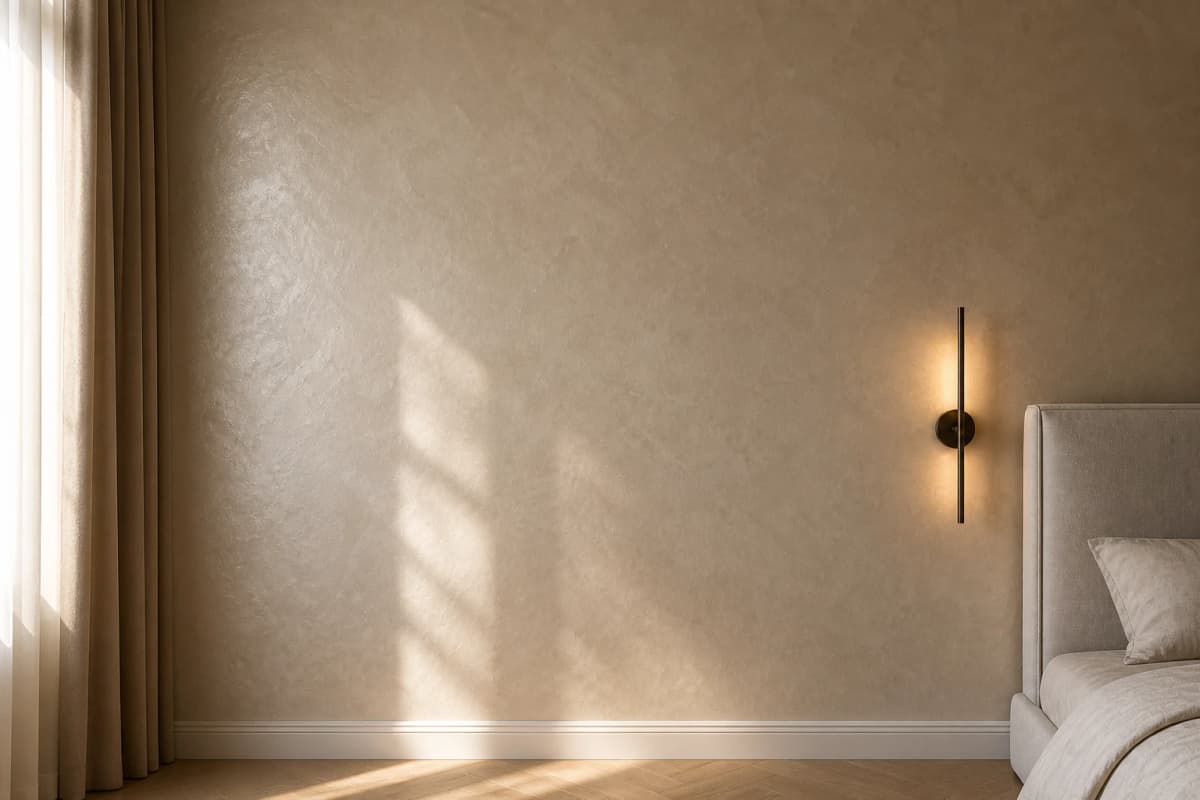
Warm wet-silk-effect decorative plaster on a bedroom wall

This thin, smooth finish changes shade depending on the angle of the light. It works well in a bedroom, living room, or home office, but requires a carefully prepared substrate: side lighting highlights not only the shimmer but also defects in the wall. The finer the pattern and the more restrained the pearlescent effect, the easier it is to use the finish over a large area without making the room feel overdecorated.

Concrete effect and matt mineral textures
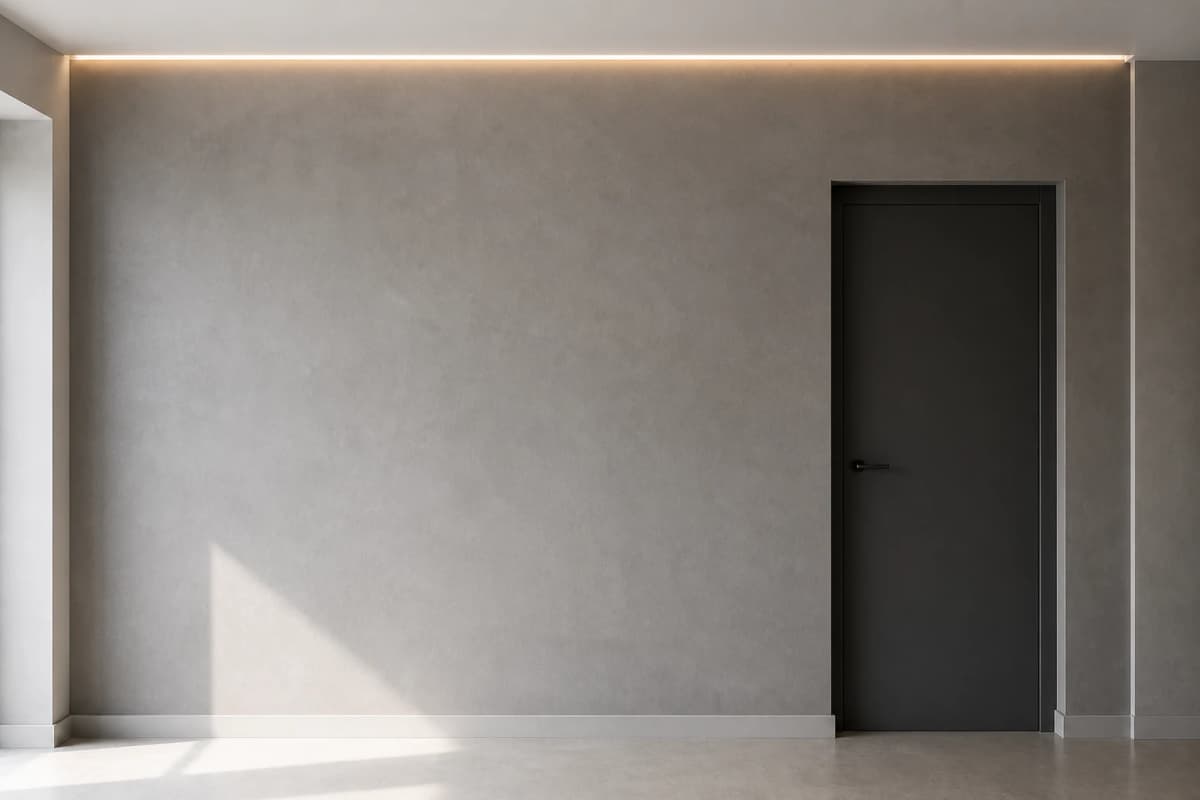
Matt grey decorative plaster with an architectural concrete effect

A restrained pattern without deep relief works well over large areas in minimalist, industrial, or contemporary interiors. A good concrete effect relies on soft tonal transitions and trowel marks rather than painted-on cracks. Matt sand finishes belong to the same practical group, but they have a finer grain and respond more warmly to light.

Travertine, marmorino, grotto, and stone effects
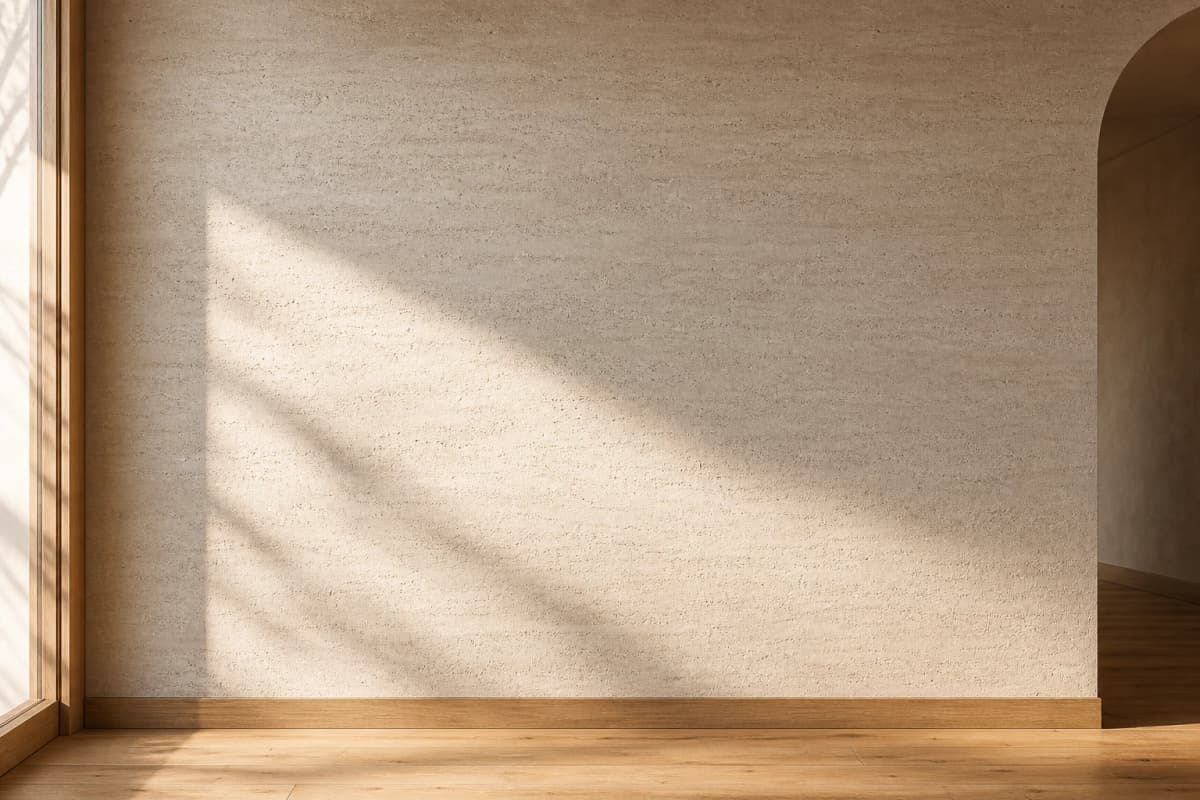
Warm travertine-effect decorative plaster with a horizontal stone texture

The material is applied in a thicker layer and shaped with a trowel to create pores, horizontal veins, or the effect of cut stone. The texture makes a strong feature in a living room, hall, or open-plan kitchen and living room, but dust can collect in deep recesses if the surface is not properly protected. In a small room, a subtle travertine pattern is preferable to a high-contrast imitation of large stone blocks.

Venetian plaster
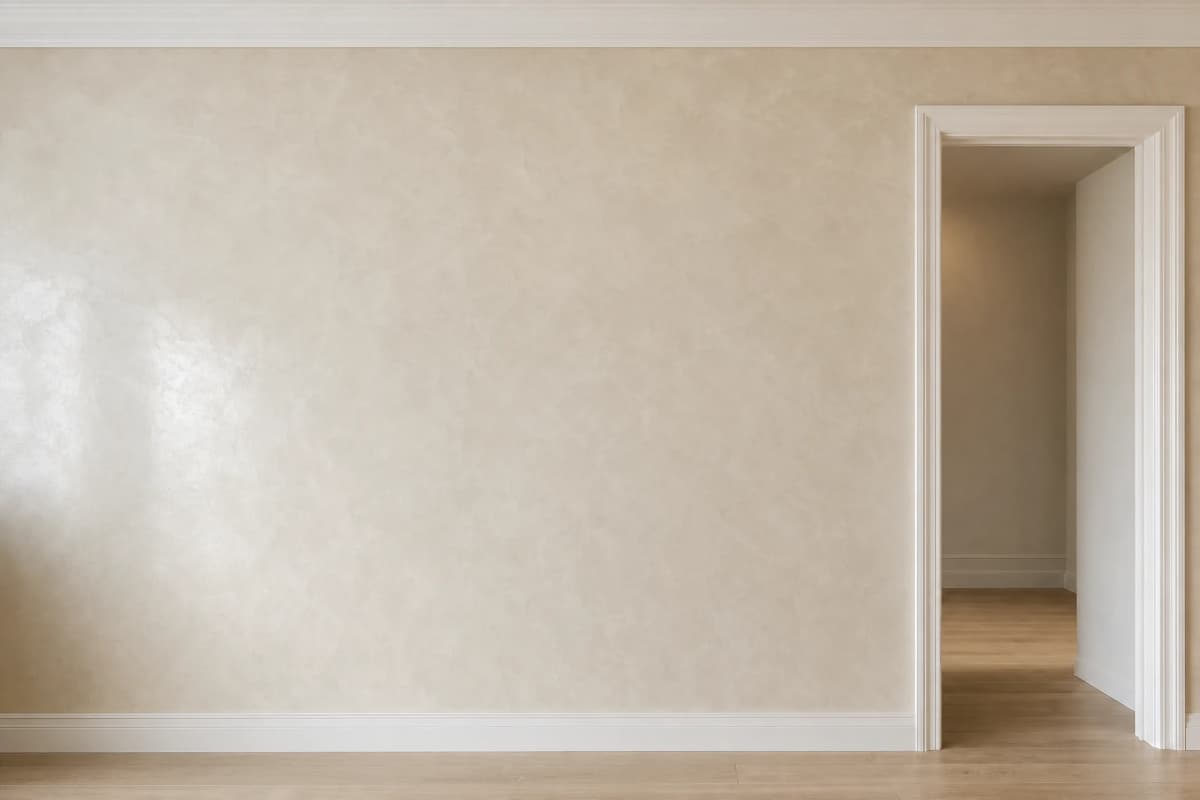
Light Venetian plaster with a soft polished marble effect

Several thin coats are compacted and polished to create the depth of natural marble. This is hand-applied work in which the pattern depends on the craftsperson, the pressure applied, and the direction of the trowel. Venetian plaster is best used sparingly: on one wall, in a niche, or around a portal. Excessive gloss and contrasting veins can quickly make an interior feel heavy, while a restrained satin finish remains relevant for longer.

Microcement
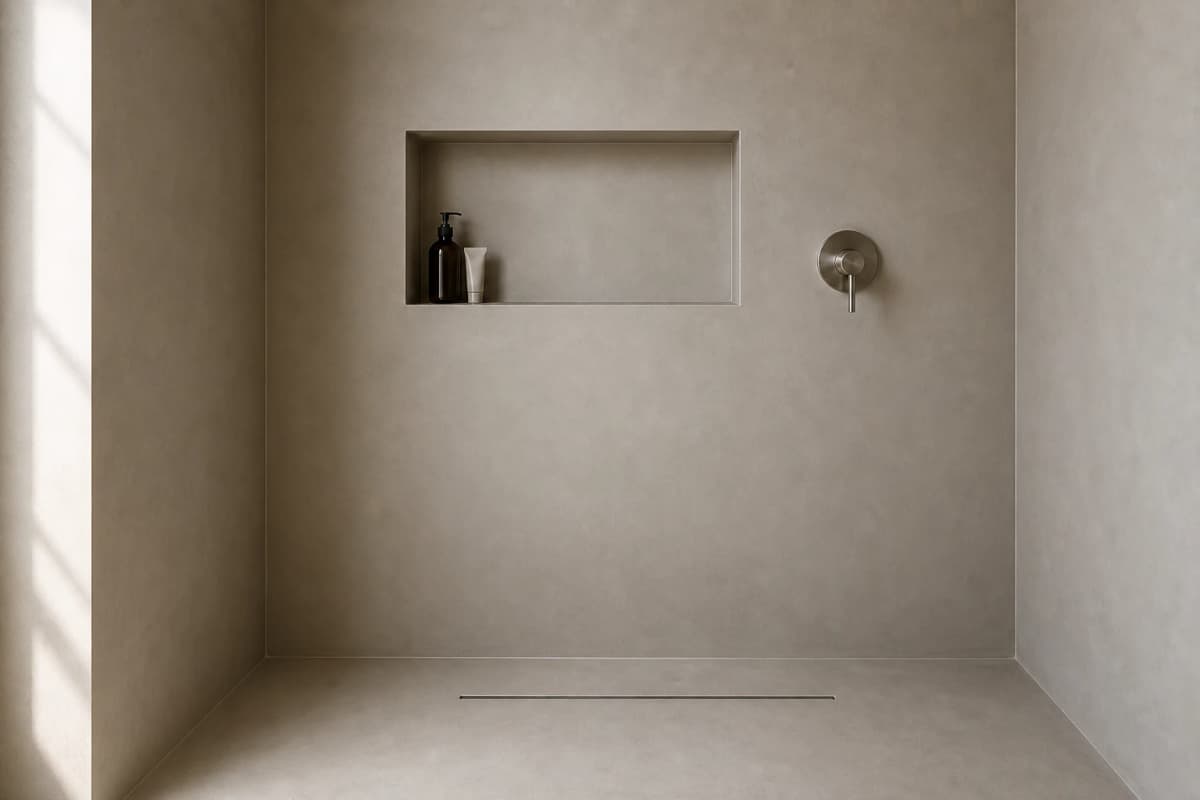
Seamless warm-toned microcement on the walls and floor of a shower with a built-in niche

Microcement is a seamless cement-polymer finish for walls, floors, and furniture surfaces. In a bathroom, it only works as a complete system: a stable substrate, waterproofing, reinforced junctions, and protective coats. The decorative layer alone does not replace waterproofing. High-quality microcement has a fine, natural clouded appearance without tile joints, while slip resistance and protection are specified separately for walls and floors.

Decorative plaster, paint, or wallpaper: which is more practical?

A decorative finish should be chosen for the way the room will be used, not simply because it is fashionable. Paint provides an even, predictable colour and is easier to repair locally, but waves in the wall are particularly visible under matt or gloss paint. Wallpaper is faster to install and conceals minor visual imperfections, but it has joints and offers a limited choice of genuinely mineral textures. Decorative plaster creates a seamless, hand-finished surface and can be durable and washable when properly sealed, but an accidental scratch is harder to touch up invisibly.

The common claim that textured plaster will “level any wall” is misleading. A pronounced texture can indeed disguise minor visual irregularities better than paint, but it will not cover moving cracks, weak filler, or changes in the wall plane. The decorative layer follows the behaviour of the substrate. If a wall cracks where two materials meet, the cause must first be addressed and the problem area reinforced before the texture is created. We discuss the condition of developer-finished substrates and the scope of the initial construction phase separately in our article on the first-fix stage of apartment renovation.

What should a decorative finish estimate include?

The phrase “decorative plaster — UAH 700/m²” means little unless every layer is specified. A proper estimate separately lists the area, the condition of the substrate, the chosen system, the number of colours, protection, and complex elements. The complete process is as follows:

  1. Substrate inspection. The craftsperson checks strength, moisture, cracks, changes in plane, and whether the old finish is compatible with the new one.
  2. Test sample. Approval is based not on a picture on a phone, but on a physical sample made with the same colour, pattern, level of sheen, and protective coat.
  3. Preparation. Weak layers are removed, defects repaired, and the substrate levelled to the standard required for the chosen effect before a compatible primer is applied.
  4. Base and decorative coats. The number depends on the system: a thin decorative paint may require a tinted base and two decorative passes, while the Venetian technique uses several thin coats that are compacted as they are applied.
  5. Final protection. Wax, glaze, or polyurethane lacquer is selected according to wear and moisture exposure. Substituting the finish without approval changes the colour, sheen, and washability.
  6. Inspection and acceptance. The wall is checked in daylight, general room lighting, and the planned side lighting, not only under the contractor’s work light.
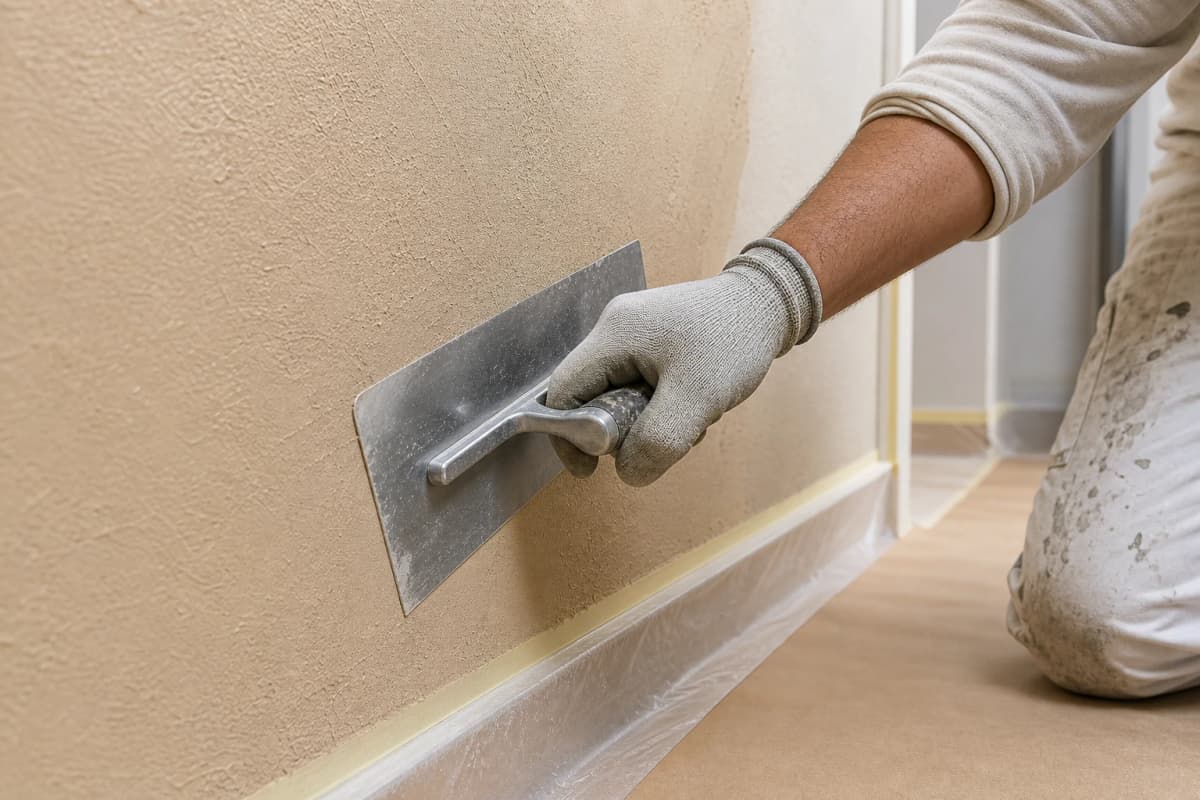
A craftsperson applying beige decorative plaster with a steel trowel

Ask for the material names and sequence of coats to be recorded in the estimate or sample approval document. This will make it clear a year later how to care for the surface and how to restore a damaged area. This approach matters more than the brand: even a high-quality material cannot compensate for a poorly prepared substrate or insufficient drying time between coats.

Where does a decorative finish work best?

In a living room or bedroom, one large accent surface without unnecessary corners works best: the wall behind the sofa, headboard, or television. It shows off the hand-applied pattern without inflating the estimate with dozens of reveals. Pearlescent effects should be viewed with the wall lights and track lighting switched on because the direction of the light changes the perception of colour.

In a hallway, you need a washable finish with a protective topcoat, especially around switches, doors, and the corner where luggage is kept. An excessively deep texture is impractical because it is harder to clean and repair locally. In a kitchen, decorative plaster works well outside areas directly exposed to grease and water. A splashback requires a system whose manufacturer explicitly permits that use, or a conventional protective material such as glass, tile, or porcelain stoneware.

In a bathroom, the bedroom specification cannot simply be reused. A moisture-resistant system applied according to its technical specification is sufficient for walls outside the shower. In a shower or next to a bath, the finish requires waterproofing beneath it, flexible sealing tape in the corners, and the protective coats specified by the manufacturer. If you want a seamless surface in a wet area, choose a specific microcement system with a certified application process rather than a material based solely on the word printed on its label.

How to choose a colour and texture without an expensive redo

The final choice should be made using a sample at least 50 × 50 cm in size, and an even larger one for a bold pattern. A small chip cannot show the scale of the trowel strokes, repetition, or how the craftsperson blends adjoining sections. Place the sample vertically in the room where it will be used and inspect it in the morning, evening, and under artificial light. Warm lighting intensifies beige and yellow tones, cool light can give a grey concrete effect a bluish cast, and pearlescent finishes change even with the viewing angle.

For a small apartment, it is safer to choose a restrained texture and repeat one of its tones in textiles or timber than to use a different effect in every room. If you want expressive travertine, rust, or artistic Venetian plaster, limit it to one focal surface. The wall layout, lighting, and material combinations should be fixed in the interior design before painting work begins: decorative finishes are applied near the end, but the positions of wall lights, skirting boards, concealed doors, and furniture must be known in advance.

How to check the quality of the application

A high-quality decorative finish does not have to be mechanically uniform: hand-worked transitions and slight variations give it character. However, the result must match the approved sample in colour, pattern scale, and sheen. Before accepting the work, check that:

  • there is no delamination, blistering, full-depth cracking, or sharp, brittle protrusions;
  • there are no accidental “squares” from pauses in application or abrupt boundaries between batches on a large wall;
  • corners and junctions with the ceiling, sockets, and architraves have clean lines without build-up;
  • the level of sheen matches the sample under every lighting scenario;
  • the craftsperson has provided the material names, colour or tinting code, and care instructions;
  • a signed sample or a small reserve of finishing material remains for future restoration.

A local repair may remain visible, especially on Venetian plaster, pearlescent finishes, and large patterns. It is therefore better to agree in advance where the natural boundary of a repair will run: from corner to corner, along a niche, or to a doorway. You can see how materials and lighting work in completed interiors in the KyivReno portfolio.

The contractor’s warranty should distinguish between an application defect and a substrate problem. Delamination between compatible coats or failure to reproduce the approved pattern is the craftsperson’s responsibility. A crack caused by a moving partition, a leak, or an impact has a different cause. Record the condition of the substrate before work begins, the approved sample, and the composition of the system: without this evidence, it is almost impossible to determine which layer caused a problem after the renovation.

Five mistakes that make decorative plaster more expensive

  • Choosing from an edited photo. The camera, screen, and warm light alter the colour and sheen; you need a physical sample.
  • Comparing only the rate per m². A cheap quotation without preparation, primer, and final protection becomes more expensive once the additional work is included.
  • Expecting texture to conceal cracks. Movement in the substrate will sooner or later show through the decorative layer.
  • Using an ordinary finish in the shower. Wax does not replace waterproofing, and the name “microcement” does not guarantee water resistance without the complete system.
  • Ordering every wall before approving one. Complete a test area or one accent wall first, approve the pattern under the actual lighting, and only then continue.

To receive an estimate without hidden extras, send us the wall area, photographs of the substrate, and two or three texture references. We will help narrow down the options, prepare control samples, and price preparation, application, and materials separately. You can submit an enquiry on our contact page; current full-renovation packages are listed on our pricing page.

Frequently asked questions

Is decorative plaster cheaper than painting?

Not necessarily. A coarse texture sometimes requires less perfect preparation than smooth paint intended to be viewed under critical lighting, but the material and hand application cost more. Compare the full process: substrate repairs, primer, decorative coats, final protection, and complex elements. The difference may be small for a simple silk effect, while Venetian plaster or microcement usually costs considerably more.

Can decorative plaster be applied over paint or wallpaper?

Not over wallpaper: it must be removed along with the adhesive before the substrate is inspected and primed. Old paint may remain only if it is firmly bonded, compatible with the new system, and prepared according to the technical specification. A gloss or weak surface must be abraded or removed. The decision should be based on an adhesion test, not visual inspection alone.

Does decorative plaster crack in a new-build apartment?

The finish itself is rarely the cause of a structural crack, but it follows the movement of the substrate. The risk is higher at junctions between concrete, aerated concrete, and plasterboard, near new openings, and on recently built partitions. Shrinkage and wet construction processes must be complete before application, cracks repaired, and high-risk junctions reinforced in accordance with the system.

Is decorative plaster suitable for a bathroom?

Yes, but not every type. Outside areas directly exposed to water, moisture-resistant decorative systems with compatible protection can be used. A shower requires separate waterproofing, sealed junctions, and a protective system expressly approved by the manufacturer. For microcement in a wet area, a stable substrate and several coats of sealing finish are especially important.

How long does application take on one accent wall?

Once the substrate is ready, a simple thin-layer finish requires several successive passes, while multilayer Venetian plaster or microcement requires more drying intervals and final protection. You therefore need to allow for both working hours and drying time between coats. The exact schedule is determined by the technical specification for the selected system; full use or wet cleaning is permitted only after final curing.

Turnkey renovation rates 2026

All rates and what's included