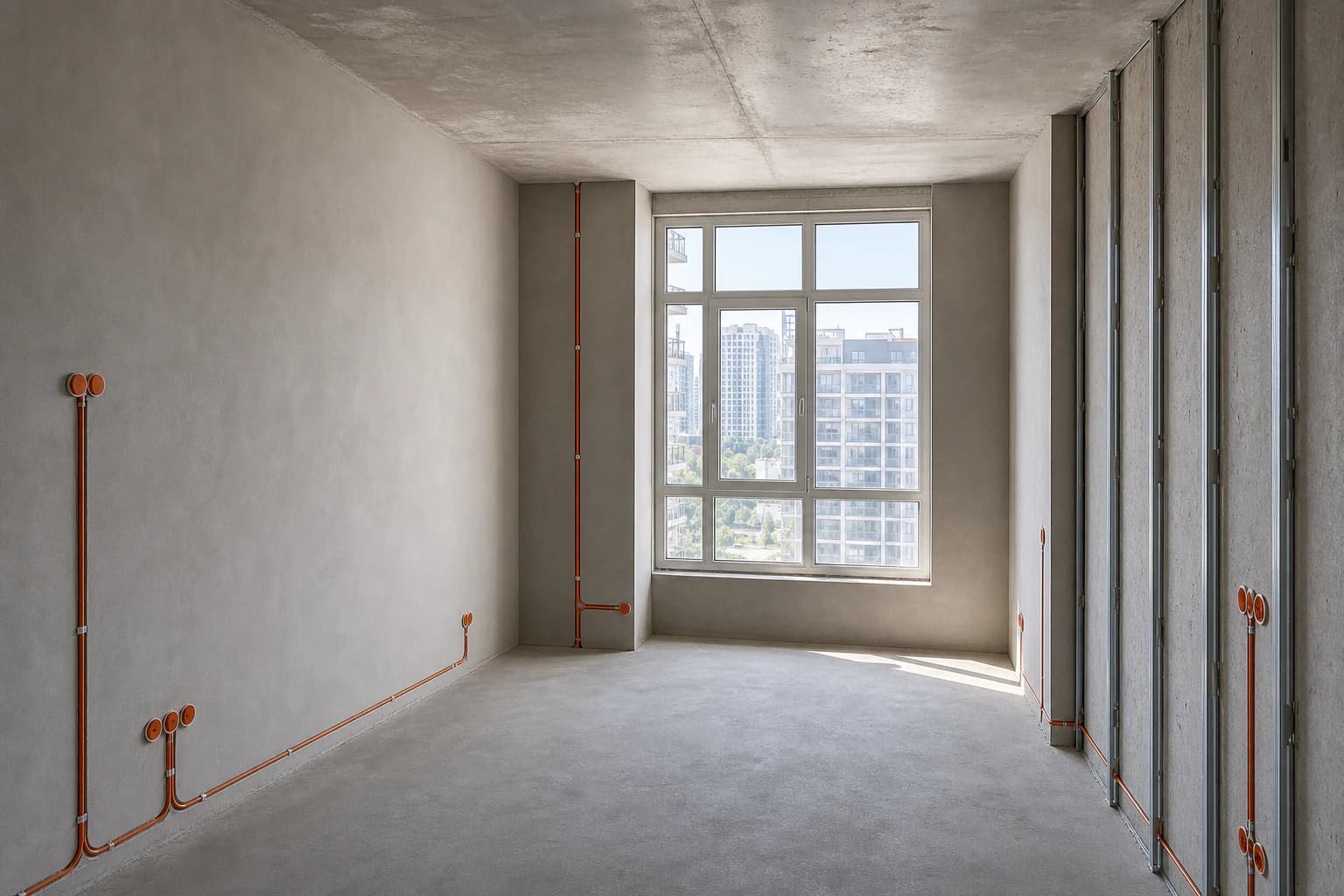
Rough renovation is all the work that leaves an apartment ready for finishing but not yet liveable: utilities, plastering, screed and waterproofing. Every renovation estimate has a line item for it that the client sees but rarely understands, and almost everything done at this stage later disappears under paint, tile and flooring. The rough-in stage is exactly where it gets decided whether your walls will be flat, whether the circuit breaker will keep tripping, and whether you will have to dig up the tile in two years because of a leak. In this article we break down what exactly goes into the rough-in stage of an apartment renovation, how much it costs in Kyiv in 2026 at real rates, and how to check the quality of the work while it is still visible. If you need the full structure of renovation costs, we already laid it out in our breakdown of a real estimate.
Need rough renovation for your whole apartment? Our complete rough renovation service in Kyiv explains the package scope, shows completed work and sets out how to get an estimate. If you need an apartment with finished surfaces, compare it with full turnkey renovation.
If your goal is a finished home, plan the rough-in work as part of a turnkey apartment renovation. Socket, plumbing and lighting positions depend on the future furniture and finishes, so agree these decisions before installing utilities. The service page explains the complete renovation scope and compares the Comfort and Premium packages.
What the rough-in stage is and where the line with finishing sits
The rough-in stage covers all the work that prepares an apartment for finishing: replacing or installing the wiring, running water and drainage lines, plastering the walls, pouring the floor screed, and waterproofing the wet zones. A simple way to find the line: the rough-in stage ends where the materials you will see every day begin. Paint, tile, laminate, doors, and plumbing fixtures already belong to the finishing stage.
In practice the line often gets blurred, and that is a common source of disputes with contractors. Skim-coating walls for painting formally prepares the surface for finishing, but it is done after the plaster, and many companies price it as a separate item. In our estimates, bringing walls up to a paint- or wallpaper-ready finish is included in the rough-in package, so the client does not get an unexpected surcharge between stages. When you compare offers from different companies, the first question should not be "how much does it cost" but "what exactly is included in that figure".
What the rough-in stage includes: list of work
The basic scope of an apartment's rough-in work is the same for most projects. Here is the list we build the rough-in package from:
- Electrical work. Full replacement or installation of the wiring, running circuits to each room, back boxes, and mounting and wiring up the electrical panel. The details of the process are described on the electrical work page.
- Plumbing rough-in. Water and drainage pipes to every point of use, the manifold, relocating risers where needed, and pressure-testing the system. More on this in the plumbing work section.
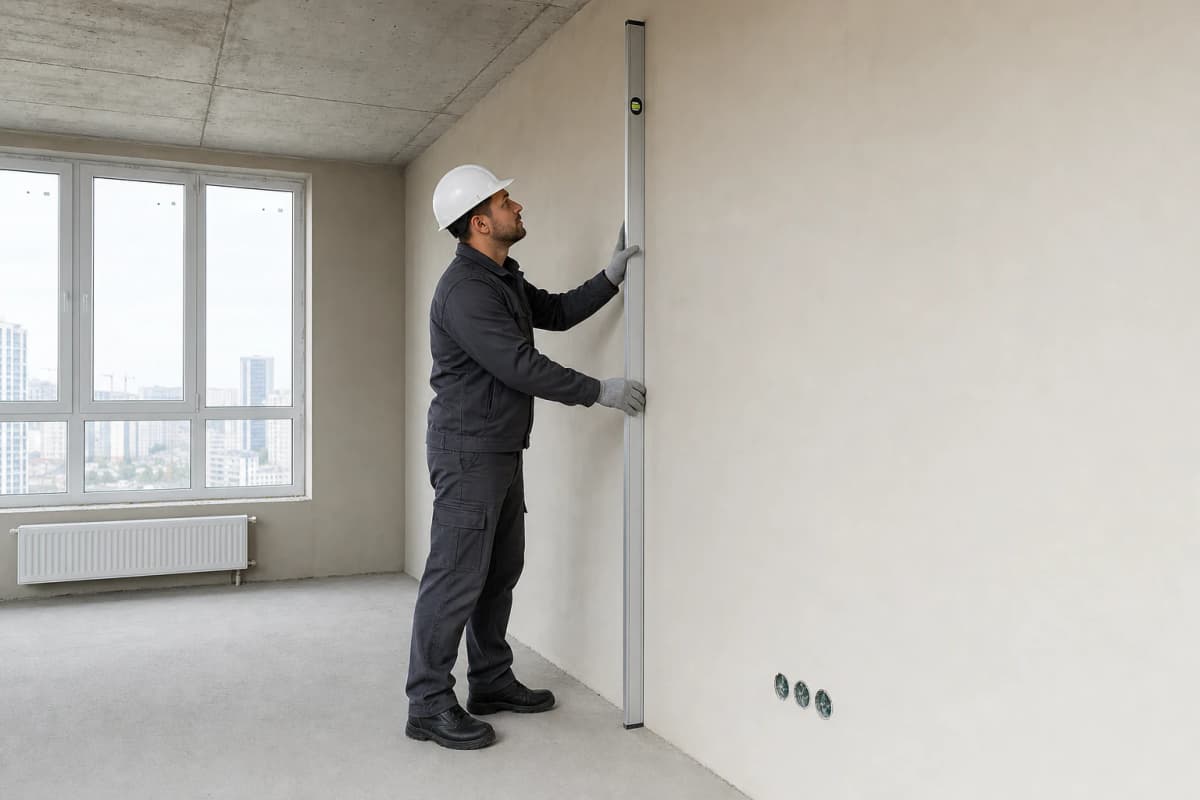
- Plastering walls to beacons. Levelling all walls to a single plane, checked with a straightedge. This is the largest block of the rough-in stage by volume, and we describe it separately on the plastering work page.
- Floor screed. Levelling the base for laminate, tile or parquet, with reinforcement and perimeter damper tape.
- Waterproofing. Mandatory in the bathroom and other wet zones, carried up onto the walls where needed.
- Walls prepared for finishing. Getting the surfaces ready for paint or wallpaper.
- Documentation of concealed work. Measurement records and photo documentation of all runs before they are closed up. Without this, a year later no one will remember where a cable runs.
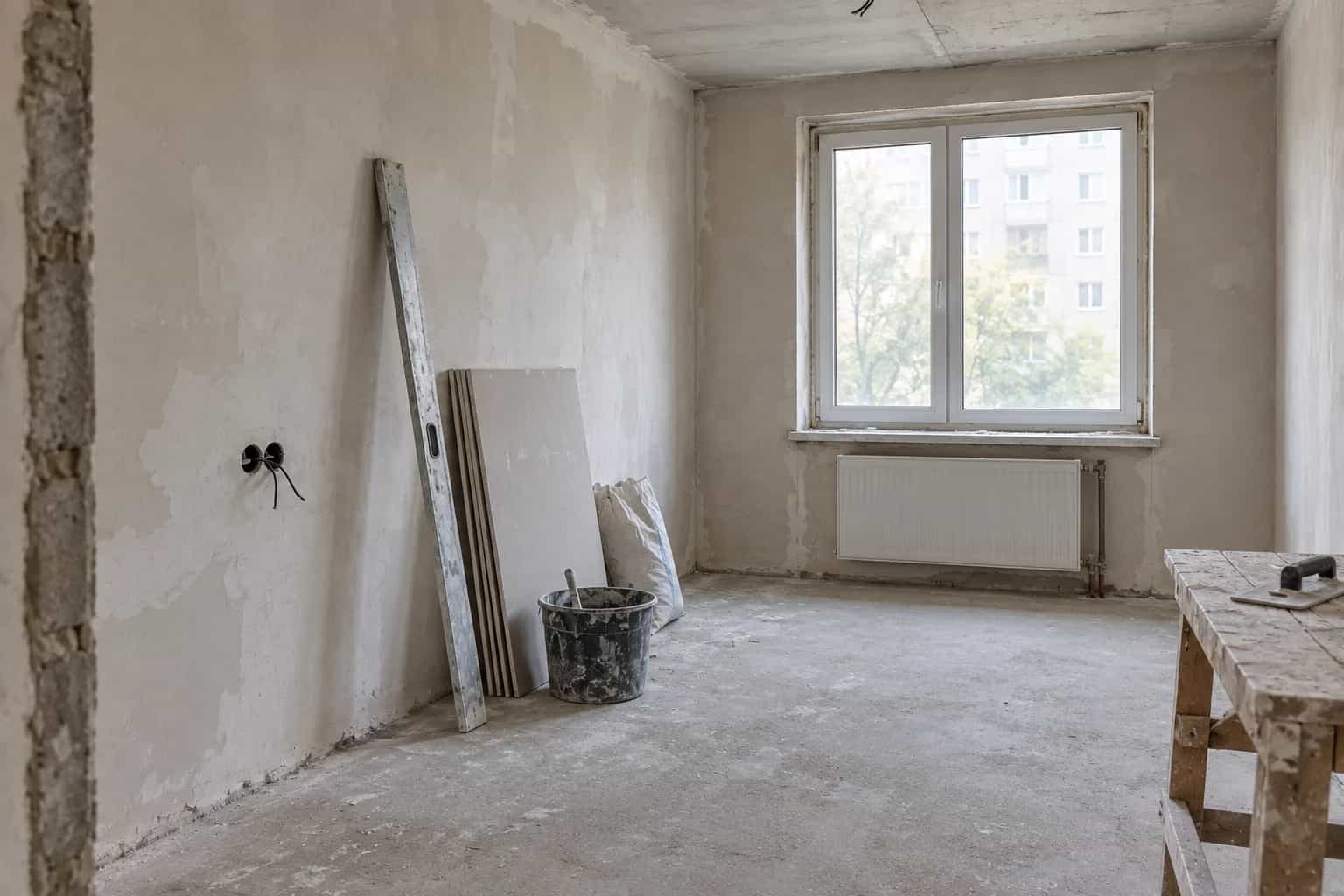
On a resale apartment, demolition is added to this list: removing old coverings, screeds and partitions, and hauling out the debris. A new build with bare walls has no such block, and that is the main reason for the budget difference between the two.
Order of work in the rough-in stage
The sequence of rough-in work matters no less than the list, because getting the order wrong costs money and means redoing work. The standard cycle looks like this: first demolition and building the new partitions, then marking out and running the electrical and plumbing lines, then plastering the walls, and only after that the floor screed. Waterproofing is done before the screed in the wet zones, and priming accompanies every transition between layers.
Why this order: the chases and back boxes need to be covered by plaster, not cut into a finished flat wall; the screed is poured after the plaster so that the heavy wet processes do not damage a finished floor. Between the plaster and the screed there are curing pauses for the material to gain strength, and you cannot cut them short: a damp base under the finish leads to cracks and delamination. If a contractor offers to "speed things up" by skipping the pauses, you will save a week now and pay for redoing the finish later.
How much the rough-in stage costs in Kyiv in 2026
Our 2026 rate for rough renovation starts at UAH 6,000/m² for labour, or UAH 12,000/m² including rough materials. The price is calculated from the apartment's floor area. For a one-bedroom apartment of 40 m² that means from UAH 240,000 for labour, or from UAH 480,000 with materials. The full scope of the package is set out on the prices and rates page.
So that you can check any estimate, here are real reference rates for 2026 on the key line items of the rough-in stage (labour, without materials):
| Work | Reference price (labour) |
|---|---|
| Plastering walls to beacons | UAH 380–390/m² of wall |
| Priming surfaces | UAH 30–40/m² per pass |
| Full-cycle electrical point | UAH 1,100–1,650 |
| Running water and drainage | UAH 35,000–75,000 per apartment |
| Wall soundproofing (optional) | ~UAH 1,650/m² |
The main trap in the arithmetic is wall area. It is 3.5 to 4 times the floor area: in a 37.5 m² apartment about 150 m² of walls get plastered. So a line item of "plastering at UAH 385/m²" in an estimate for a 40 m² apartment turns into UAH 55,000–60,000 for just one cycle, and primer is applied in several passes. Electrical work is priced by points, not by metres: a one-bedroom apartment has 35 to 50 of them, a large one around 110, so the electrical block costs from UAH 55,000 to 130,000 depending on the project. As shares of the budget it looks like this: general construction and finishing work take 75 to 80% of the labour cost, electrical work 11 to 13%, plumbing 10 to 13%. You can see real budget examples in our completed projects.