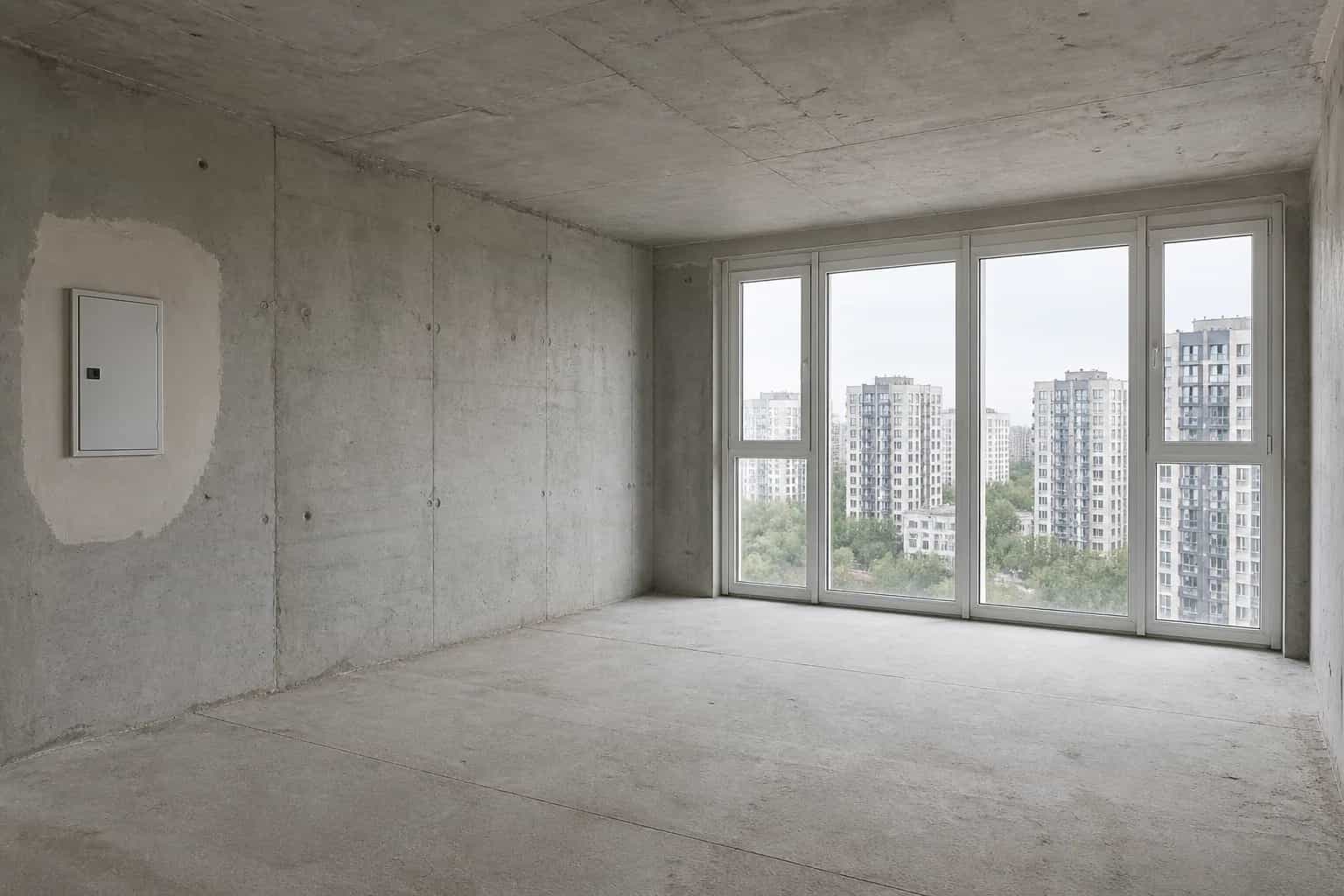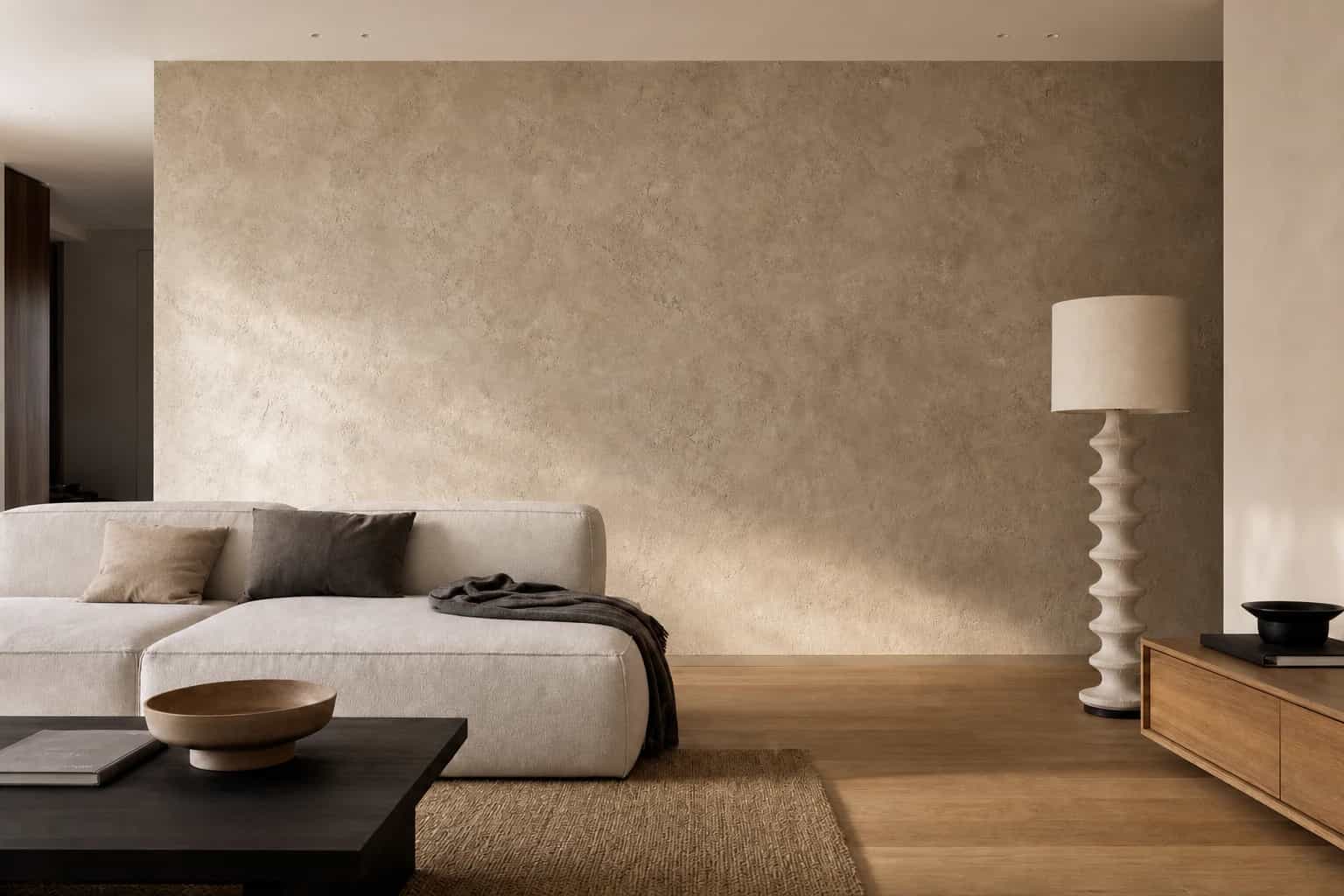
What turnkey plastering work includes
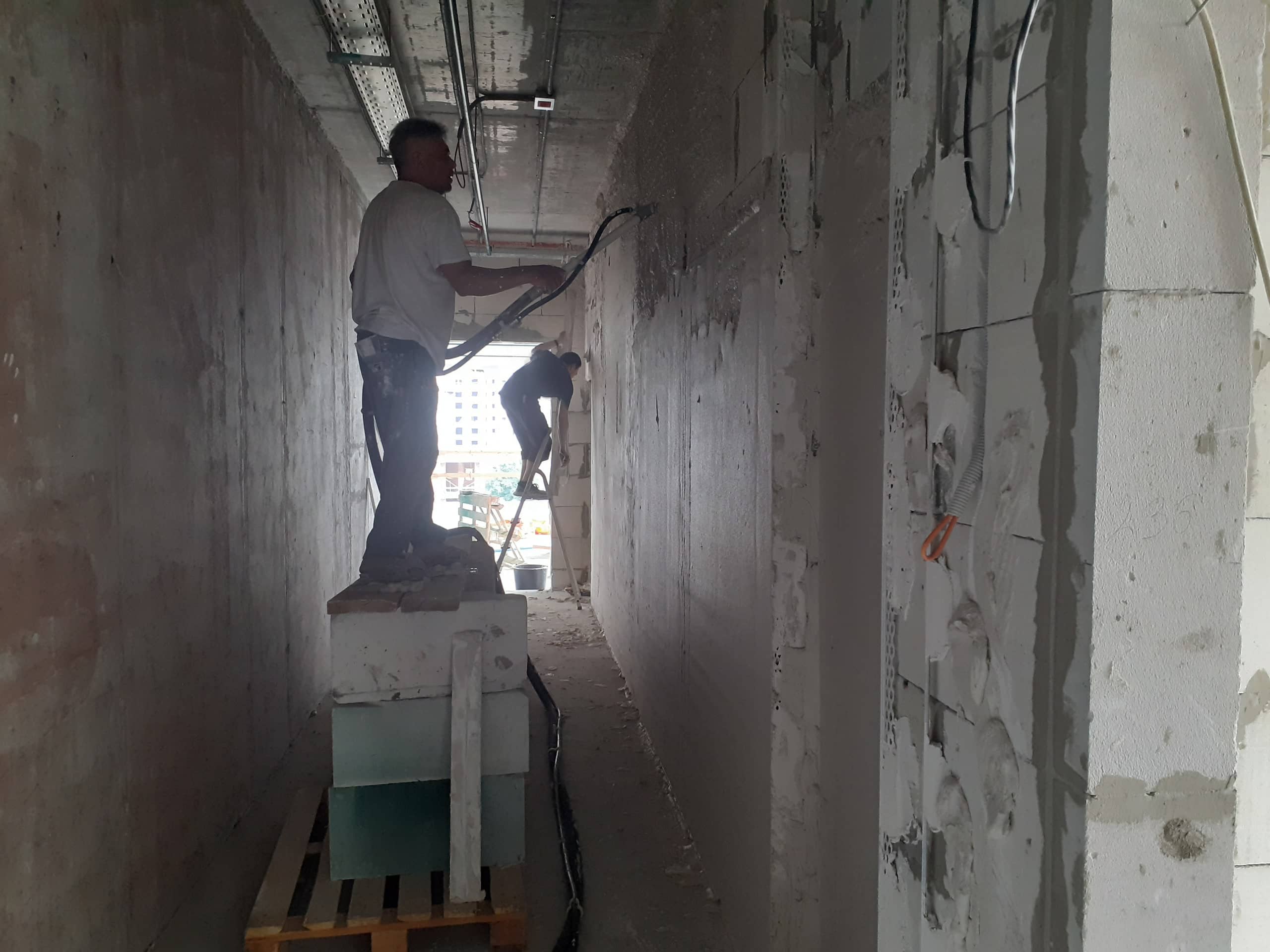
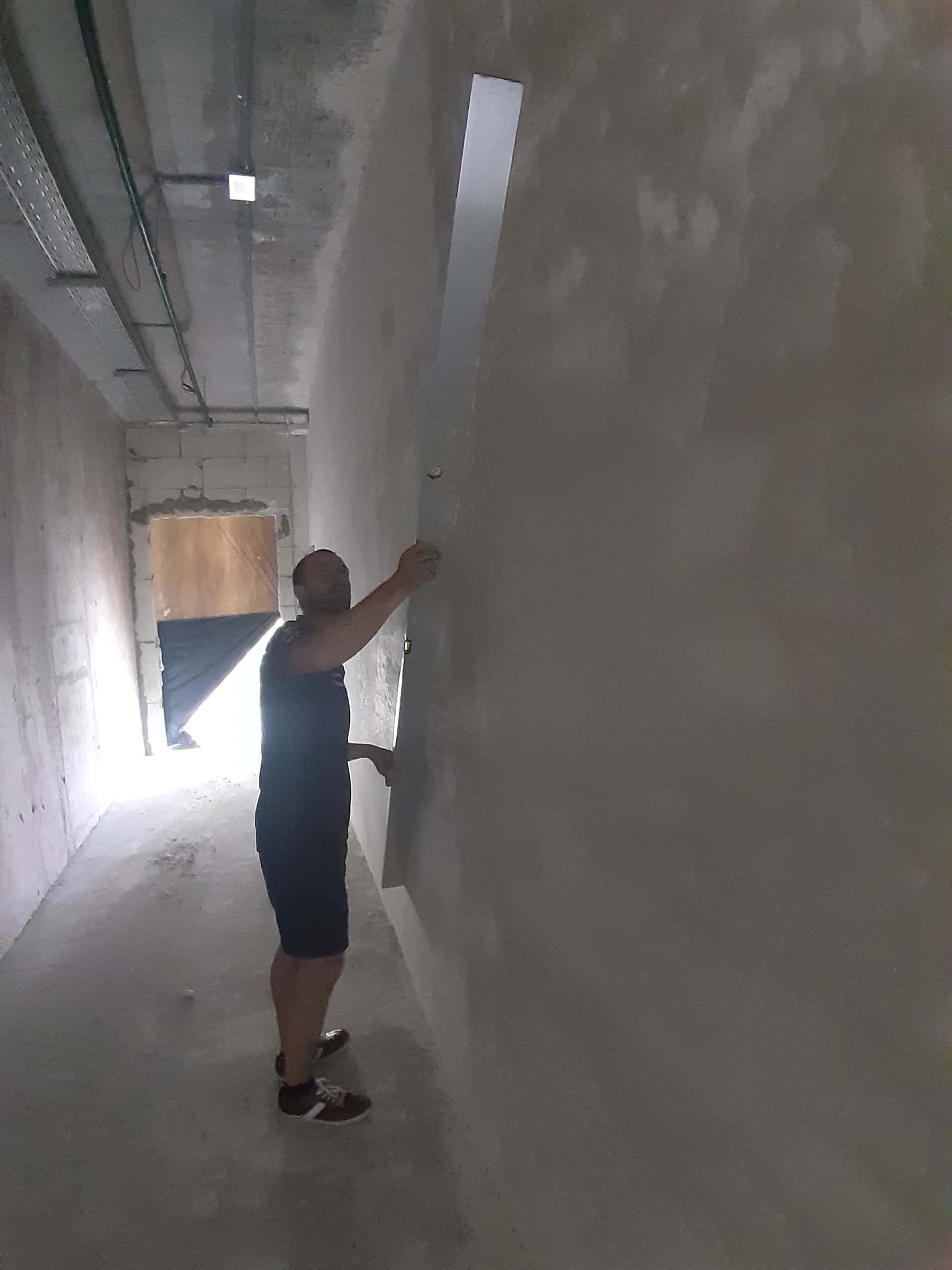
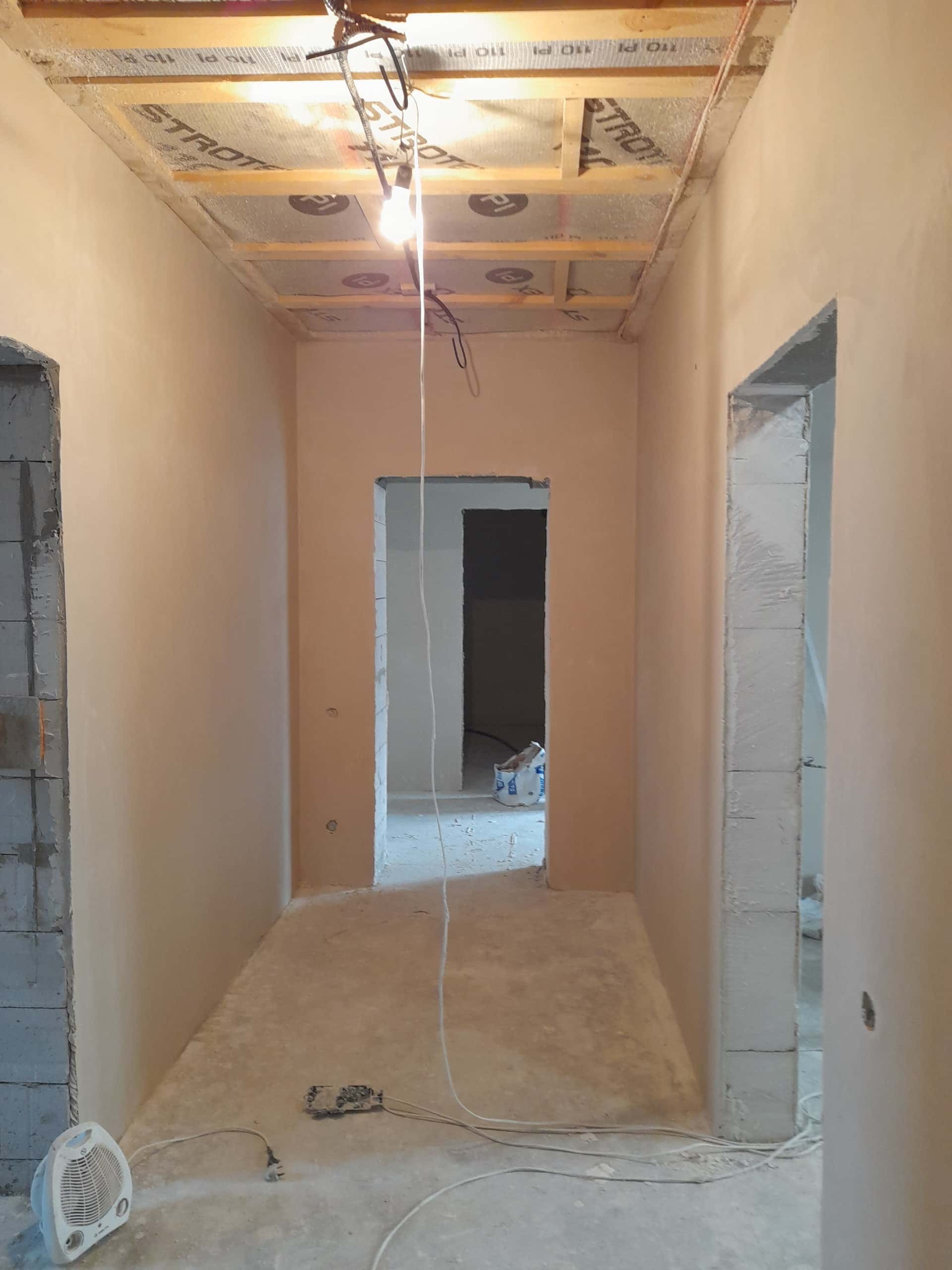
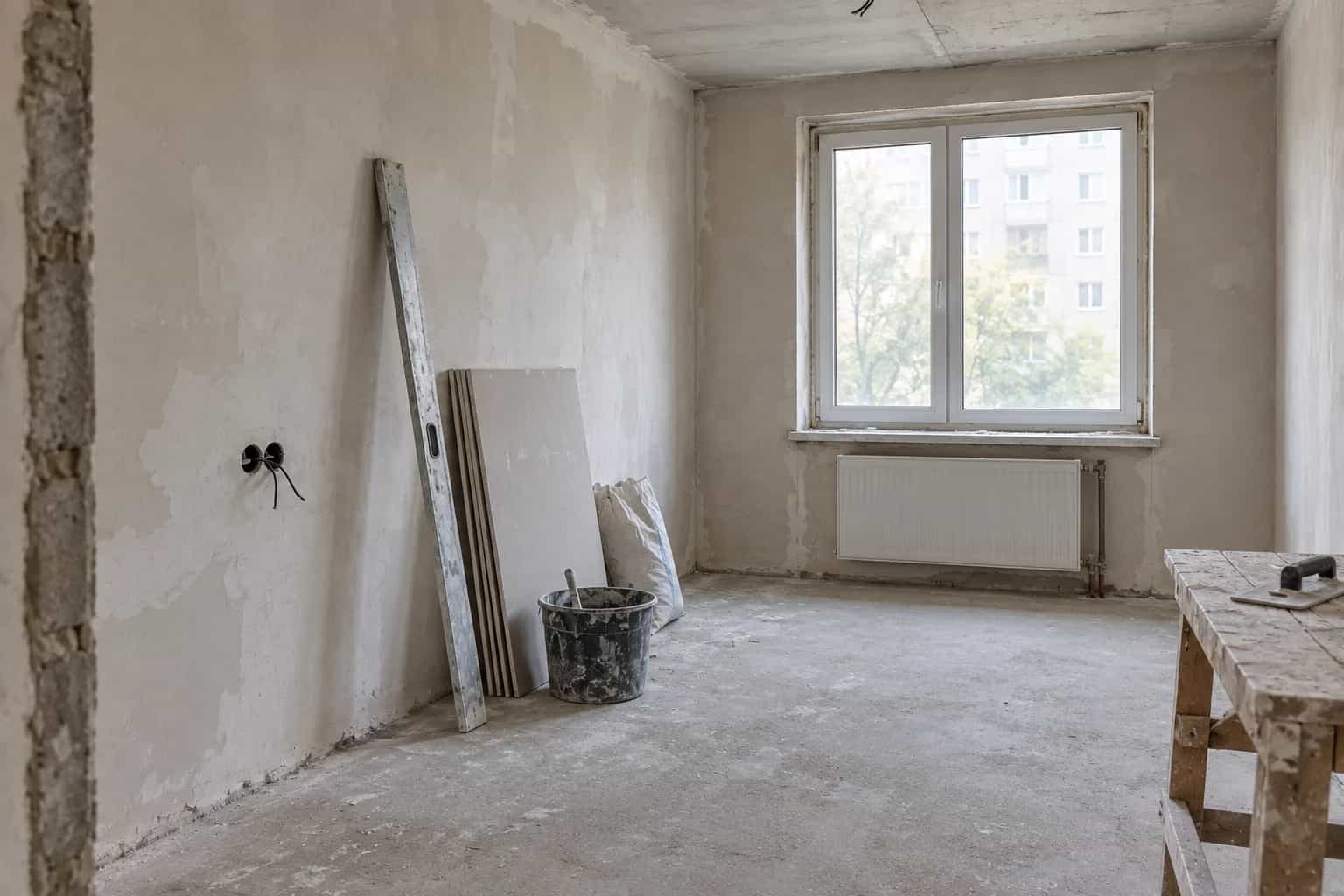
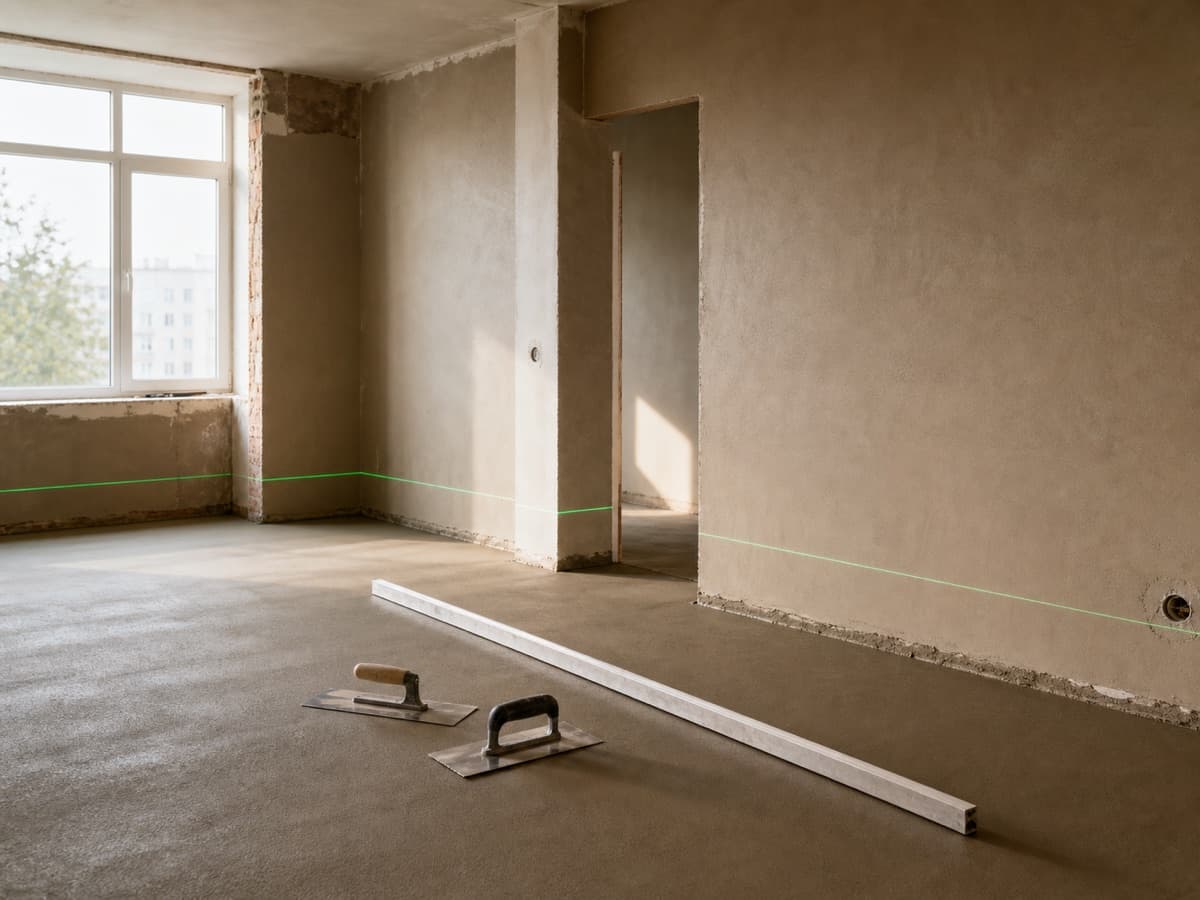
Plastering work in Kyiv by KyivReno covers the full cycle of wall and ceiling preparation — from priming the base to bringing surfaces to a finish ready for painting or wallpapering. We plaster the walls and ceilings of a whole apartment or house, as part of a rough renovation or a turnkey renovation. The crew sets beacons using a laser level, applies deep-penetrating primer, performs machine or manual plastering, reinforces external and internal corners with profiles, applies starter and finish filler coats, and checks geometry with a 2 m straightedge and under side lighting.
Alongside plastering, the crew pours the floor screed with the correct slopes toward drains in bathrooms and on balconies, with a damper tape around the perimeter and mesh reinforcement where needed. This saves time on site — rough work runs as a single cycle rather than through sequential crews.
How plastering is carried out: from measurement to handover
After a free site visit by a specialist, the client receives an estimate based on the wall area in square metres (room perimeter × ceiling height) within 3–5 days. The price is fixed in the contract, and any change in scope or extra charge needs the client's written approval. Stages of work: base preparation and priming, setting beacons by laser, machine plastering of dry zones with gypsum mixes or manual cement-sand plastering of wet zones, trimming corners and mounting corner profiles (3–5 days for a 60 m² apartment), parallel pouring of the screed and its drying (7–28 days depending on thickness), starter and finish filler coats, sanding to the high-quality plaster class.
Quality control — with a 2 m straightedge (tolerance up to 2 mm for high-quality plaster per DSTU B V.2.7-126), with a laser, and under side lighting ("under the lamp"). Each project has a dedicated KyivReno site supervisor who checks geometry at critical milestones and sends a photo report to the client. In wet zones we additionally apply a 5×5 mm fibreglass mesh to prevent cracks at the joints of dissimilar bases.
Standards, materials and warranty
KyivReno performs plastering work in line with DBN V.2.6-22-2001 and DBN D.2.5-8-2001 (Collection 8 "Plaster Works"). Surface quality follows DSTU B V.2.7-126 for dry building mixes, high-quality plaster class with a tolerance up to 2 mm over a 2 m straightedge. For screeds we meet the flatness and slope requirements in wet zones.
Mixes: Knauf Rotband (manual gypsum), Knauf MP75 (machine application), Ceresit CT 29 and CN 83 (moisture-resistant), Baumit, Polimin ShG/ShT, Siniat. Screeds — Polimin STs-5, Ceresit CN 68/69. Bosch and ADA laser levels, PFT G4 and Kaleta plaster stations. Beacons — galvanised 6–10 mm, corner profiles and 145–160 g/m² fibreglass mesh in wet zones. All completed work carries a 1-year warranty.
Our projects with plastering work
Examples of sites where KyivReno carried out the full cycle of rough work:
- Renovation of a 42 m² apartment in Optymisto residential complex, Hatne — machine gypsum plastering of walls, cement-sand in the bathroom, screed with underfloor heating.
- Renovation in a new build in Holosiivskyi district, 36 m², Standard package — machine plastering for painting, screed for laminate.
Plastering is included in all packages of turnkey apartment renovation. The full list of sites is in the portfolio.
Frequently asked questions about plastering work
How long does plaster dry before filling and tiling?
Gypsum plaster (Knauf Rotband or MP75) in a layer up to 20 mm dries for 5–7 days at normal room humidity; cement-sand plaster in a bathroom — 10–14 days. A 50 mm screed dries for roughly 28 days before the finish floor can be laid. KyivReno checks humidity with a hygrometer before starting the next stage.
Machine or manual plastering — what is the difference?
Machine plastering (gypsum Knauf MP75, PFT G4 station) lets us cover large areas in a single cycle while keeping precise geometry, and saves 30–40% of time on site. We use manual cement-sand plaster in wet zones — bathrooms, toilets and kitchen backsplashes, where water resistance and fibreglass mesh reinforcement are required.
How is quality checked — "under the lamp" or with a straightedge?
KyivReno checks surfaces with a 2 m straightedge (tolerance up to 2 mm for high-quality plaster per DSTU B V.2.7-126), a laser level, and under side lighting — a floodlight or LED lamp held at the plane surface reveals the smallest waves that would show up under paint or wallpaper. The project's dedicated site supervisor records the results at critical milestones.
Do you reinforce with fibreglass mesh in the bathroom and kitchen?
Yes — in wet zones, at joints between drywall and a cement-sand base, and at opening corners, KyivReno applies 145–160 g/m² fibreglass mesh to prevent hairline cracks after drying. In bathrooms we additionally use cement-sand plaster that holds up to wetting cycles.
Book a free site visit by a specialist to assess the scope of plastering work and prepare an estimate. Get in touch via the contact page or call the numbers listed on the site.